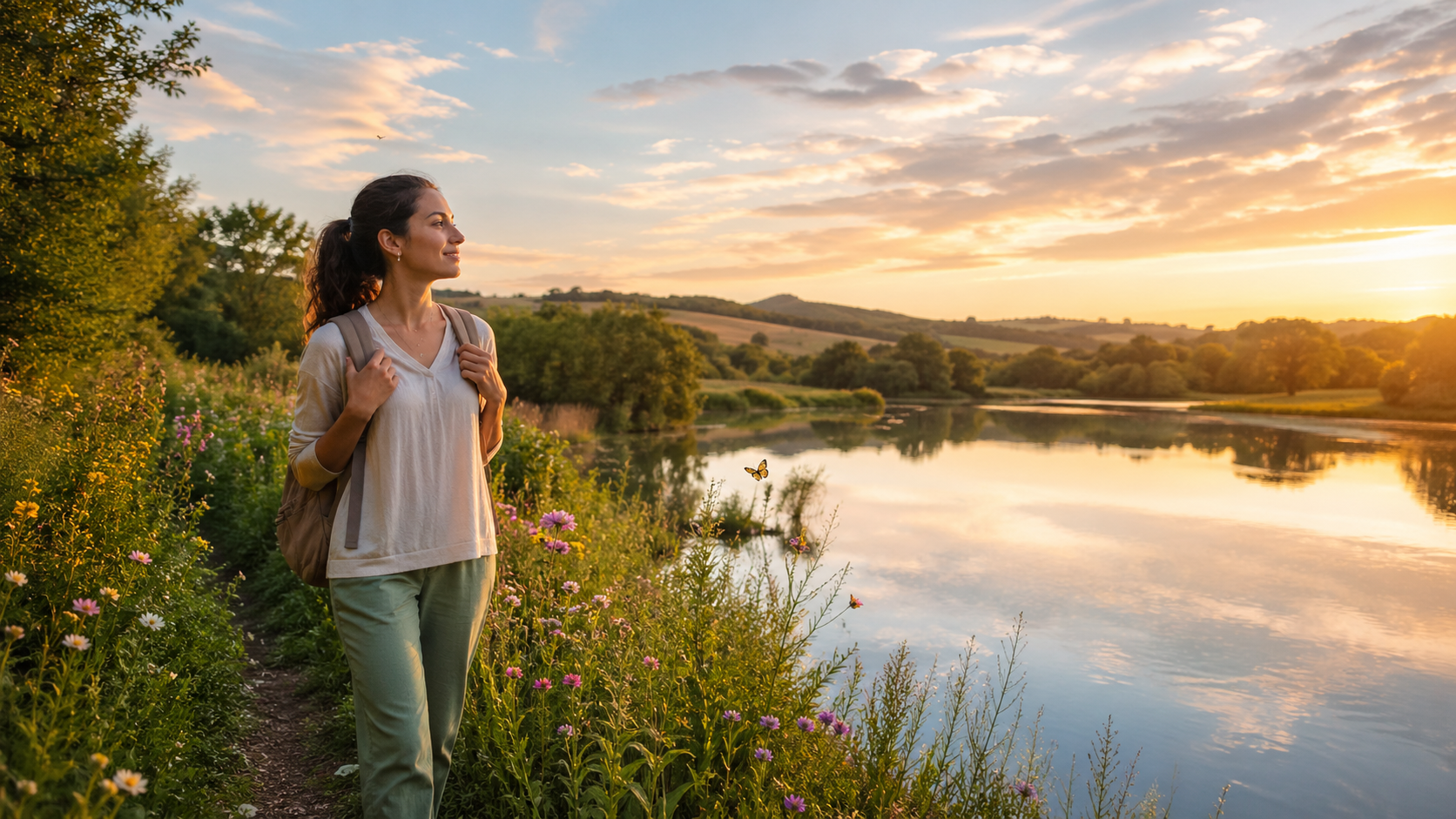
There is a particular kind of quiet that only nature seems to know how to offer. It is not empty quiet. It is not silence in the lonely sense. It is the kind of quiet that holds birdsong, moving water, the soft press of earth beneath your feet, and the steady reminder that the world is still breathing, even when you are not sure you are.
I have come to believe that we do not always heal by escaping what hurts us. Sometimes we heal by moving toward something gentler. A river. A trail. A field of wildflowers. A piece of sky wide enough to make our worries feel less permanent. Nature has a way of meeting us exactly where we are, without asking us to explain why we arrived tired, grieving, anxious, or carrying more than anyone can see.
There are days when the mind is simply too loud. It circles old pain, future fears, unfinished conversations, and all the tiny human catastrophes we somehow collect and store like emotional souvenirs. But outside, something begins to soften. The body notices before the mind does. Shoulders lower. Breath deepens. The eyes begin to search for light, movement, color, and texture. A nervous system that has been bracing for too long begins, cautiously, to remember another way of being.
This is the quiet luxury of nature. Not the polished kind, with perfect linens and cucumber water pretending to be a personality. The real kind. The kind that costs nothing but attention. Sun on your skin. Cool water around your ankles. Leaves shifting above you. The scent of damp soil after rain. These are small things, but small things often know how to reach us when larger answers cannot.
When I stand in nature, I often look up first. Toward the trees, the clouds, the distant light, or the open sky. There is comfort in seeing something larger than my own thoughts. It reminds me that what I feel may be real, but it is not everything. The sky does not dismiss my pain, but it does widen the room around it.
Then I look down. That is where the world becomes intimate again. The tiny flowers growing between stones. The insects moving with impossible purpose. The ant carrying something delicate, as if even the smallest creature has been trusted with beauty. These are the details we miss when we rush through life trying to outrun our own hearts. Yet they are often the details that bring us back.
There have been seasons when sadness has felt too heavy to carry neatly. In those moments, I have learned not to fight my tears. We spend so much of life trying to be composed, useful, resilient, and socially presentable, as though grief should arrive with good manners and a calendar invite. But tears are not weakness. They are evidence. They say that something mattered. They say that we are still tender enough to feel.
Nature does not judge that tenderness. The earth does not ask for a better version of the story. The trees do not rush us toward closure. Water does not tell us to be positive. It simply moves, and in its movement, it reminds us that emotion can move too.
I like to imagine that when tears fall to the ground, they become part of something larger. They soften the soil. They feed what may one day grow. Not immediately, because healing is rarely that convenient. But slowly, quietly, beneath the surface, where the most important things often begin.
This is why time outdoors can become such a meaningful part of mental wellness. Nature brings us back to the body when the mind has wandered too far into stress, grief, or fear. Walking, swimming, breathing deeply, standing barefoot on grass, or sitting beside water can anchor us in the present moment. It does not solve everything, and it should never replace professional support when that is needed, but it can offer a place to rest inside ourselves.
Healing does not always look like transformation. Sometimes it looks like pausing long enough to notice the light. Sometimes it looks like taking one honest breath. Sometimes it looks like letting yourself cry beside a river and trusting that the world will not fall apart because you have softened.
The smallest moments can become the most restorative. A bird crossing the sky. A flower opening without applause. A path that keeps going even when it bends out of sight. Nature teaches us, without making a speech about it, that growth does not need to be dramatic to be real.
Perhaps that is the gift. Not an escape from life, but a return to it. A return to the body, to breath, to beauty, to the quiet knowing that even in difficult seasons, something within us may still be growing.
When the world feels too loud, step outside if you can. Look up and let the sky give you space. Look around and notice what is still alive. Look down and let the smallest things remind you that nothing beautiful has to be large to matter.
Nature’s gifts are rarely loud. They wait in the ordinary places, asking only that we pause long enough to receive them.