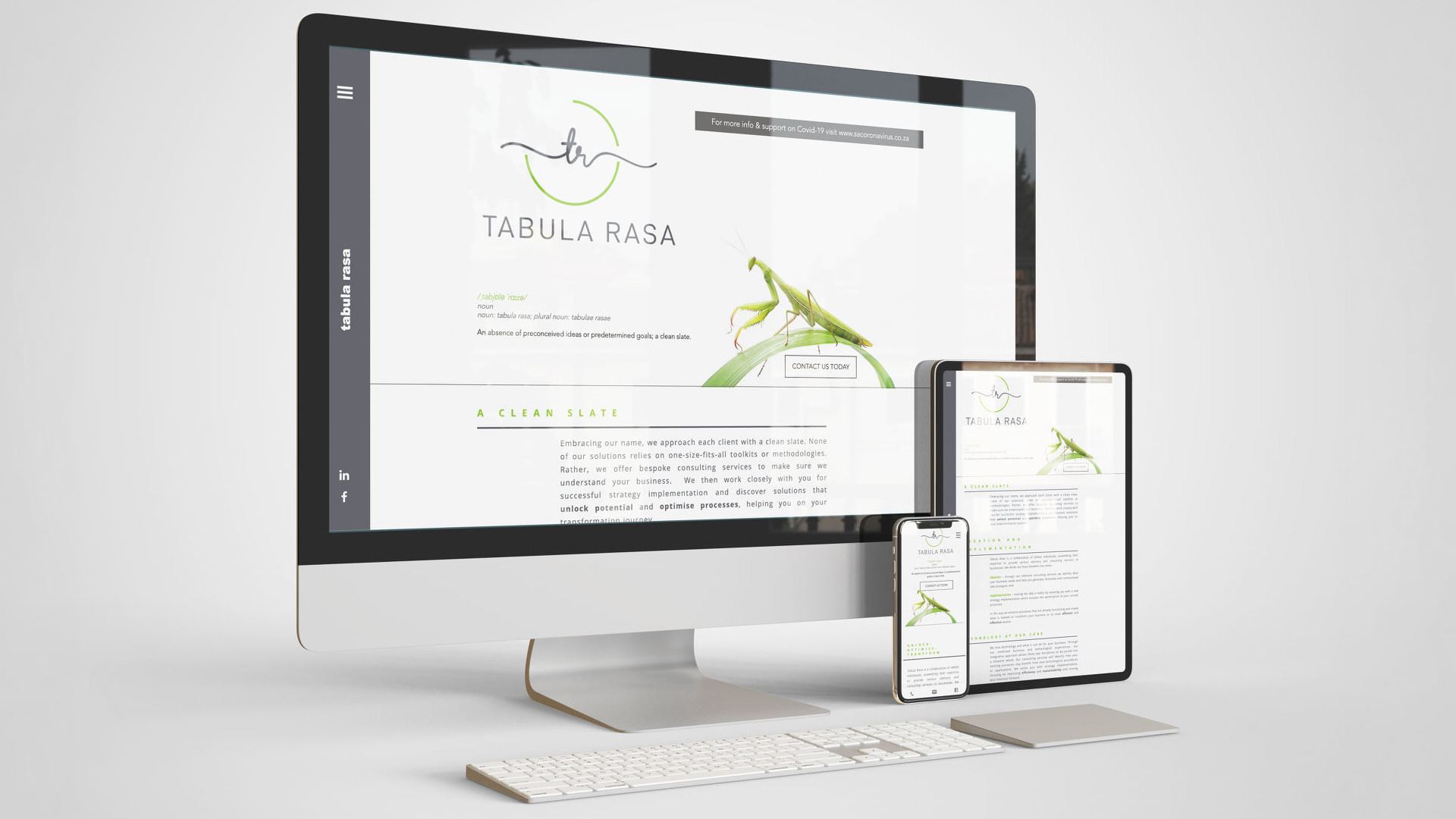
Thabula Rasa: Building a Brand From a Blank Slate
Thabula Rasa began with a powerful business idea: two corporate executives stepping out of large organizational structures to create a consulting firm that could help other companies rethink the way they worked.
The business was focused on solution architecture, corporate advisory, operational ideation, and implementation. It was created for organizations that needed more than surface-level advice. These were businesses looking for clearer systems, better structures, smarter processes, and solutions built around their specific realities rather than recycled consulting templates.
From a brand strategy point of view, the name became the foundation of the entire identity.
Tabula rasa means “blank slate.” It speaks to the idea of beginning without assumptions, which made it deeply relevant to the consulting model. The brand needed to express the discipline of entering a business with fresh eyes, listening before advising, and building solutions from insight rather than habit.
The intentional adaptation to Thabula Rasa gave the brand its own identity while still holding onto the philosophical meaning behind the original phrase.
The Strategic Challenge
This was not a redesign. There was no inherited brand system, no existing audience perception to correct, and no visual language to evolve.
It was a true startup brand.
That meant the strategy had to do more than make the business look professional. It had to establish credibility quickly, especially in a market where consulting firms often rely on corporate language, polished frameworks, and familiar claims around transformation.
The brand had to feel intelligent, calm, strategic, and human. It needed to reassure executive audiences that Thabula Rasa could work across industries while still providing tailored, thoughtful guidance.
The challenge was to build a brand that felt corporate enough to be trusted, but distinctive enough to be remembered.
Market Context
In South Africa, the consulting and advisory space is highly competitive. Large management consulting firms dominate the upper corporate market with scale, global credentials, and established methodologies. Specialist consultancies compete through technical expertise, digital transformation, software design, fintech knowledge, skills development, and operational execution.
For a startup consultancy, this created both pressure and opportunity.
Thabula Rasa could not compete by pretending to be a large multinational firm. Its strength sat elsewhere. It could position itself as more agile, more personal, and more willing to enter a business without forcing it into a pre-existing model.
The strategic opportunity was to create a brand around clarity, observation, and tailored solution-building.
Competitive Difference
Where many competitors in the consulting space present themselves through authority, scale, and process-heavy language, Thabula Rasa was positioned around thoughtful diagnosis and fresh perspective.
The company stood apart in four important ways.
First, it had the credibility of corporate experience without the heaviness of a large consulting structure. The founders understood executive environments, but the startup model allowed them to work with more agility.
Second, the brand idea was not generic. “Blank slate” gave the business a strong strategic narrative. It communicated openness, curiosity, and the discipline of not assuming that every client had the same problem.
Third, the identity could carry both corporate consulting and social-impact work. Through its association with skills development, youth upliftment, digital learnerships, BPO initiatives, and disability inclusion, the brand had the ability to speak to both business transformation and human opportunity.
Fourth, the brand language created room for trust. It was not loud, over-designed, or trend-led. It was designed to feel considered, objective, and quietly confident.
Strategic Positioning
The recommended positioning was built around the idea that Thabula Rasa helps organizations step back, see clearly, and rebuild smarter.
The brand needed to communicate:
Thabula Rasa is a strategic consulting partner that helps businesses rethink systems, processes, and opportunities from a fresh, objective starting point.
This positioning allowed the company to speak to multiple sectors without becoming vague. It gave the brand enough flexibility to work across software design, fintech, strategic growth, corporate advisory, skills development, and implementation-led consulting.
Brand Personality
The brand personality was defined as calm, intelligent, observant, practical, and trusted.
This was important because the work itself required a steady presence. Companies do not invite consultants into their operations when everything is simple. They bring them in when there is complexity, pressure, uncertainty, or growth that has become difficult to manage.
The brand therefore needed to feel measured rather than performative. It had to suggest that Thabula Rasa would listen carefully, observe patterns, identify gaps, and help leadership teams move forward with more clarity.
Visual Strategy
The visual identity was developed from the strategy rather than decoration, because apparently brands behave better when they are not built backwards from a pretty shape.
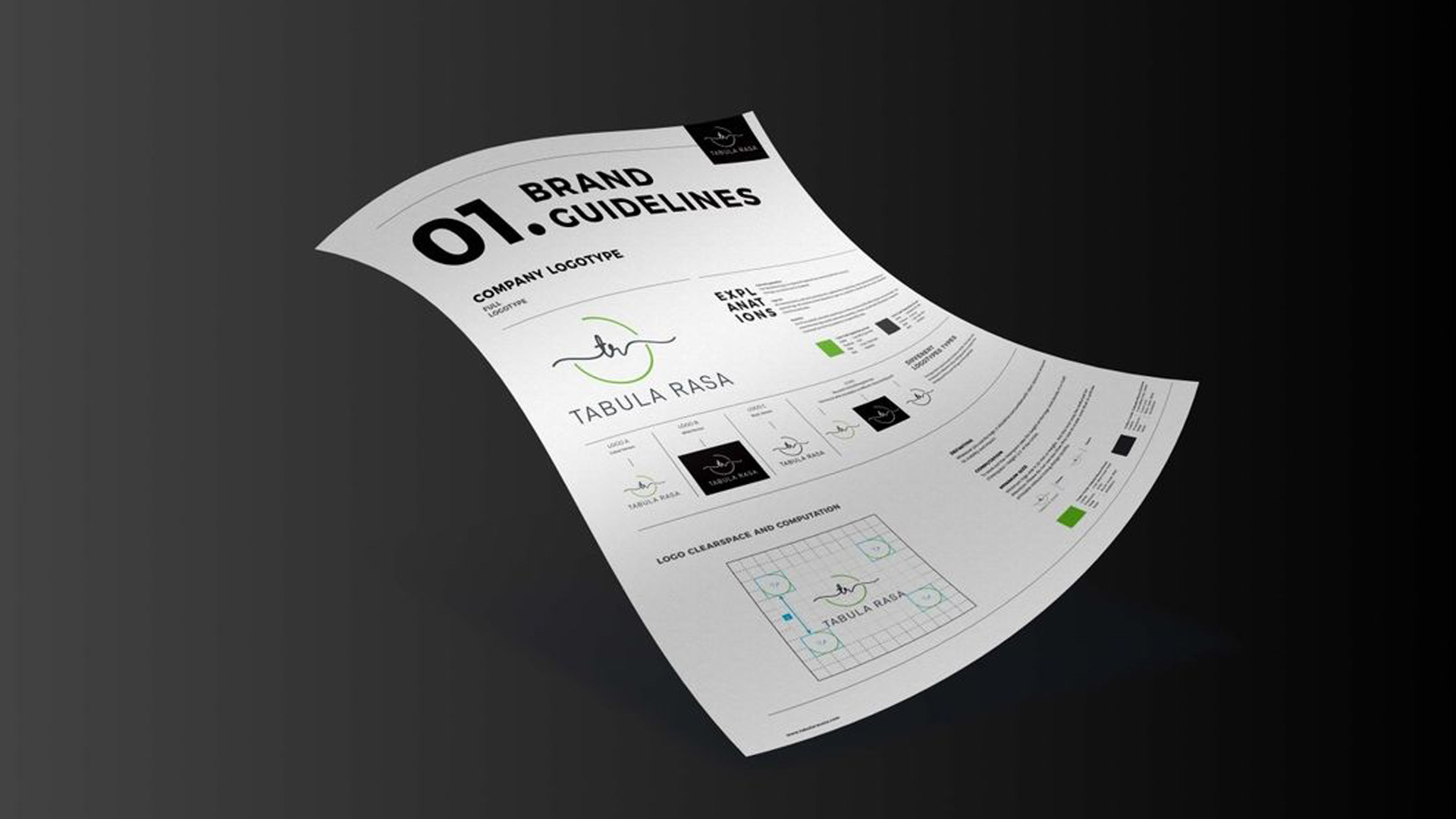
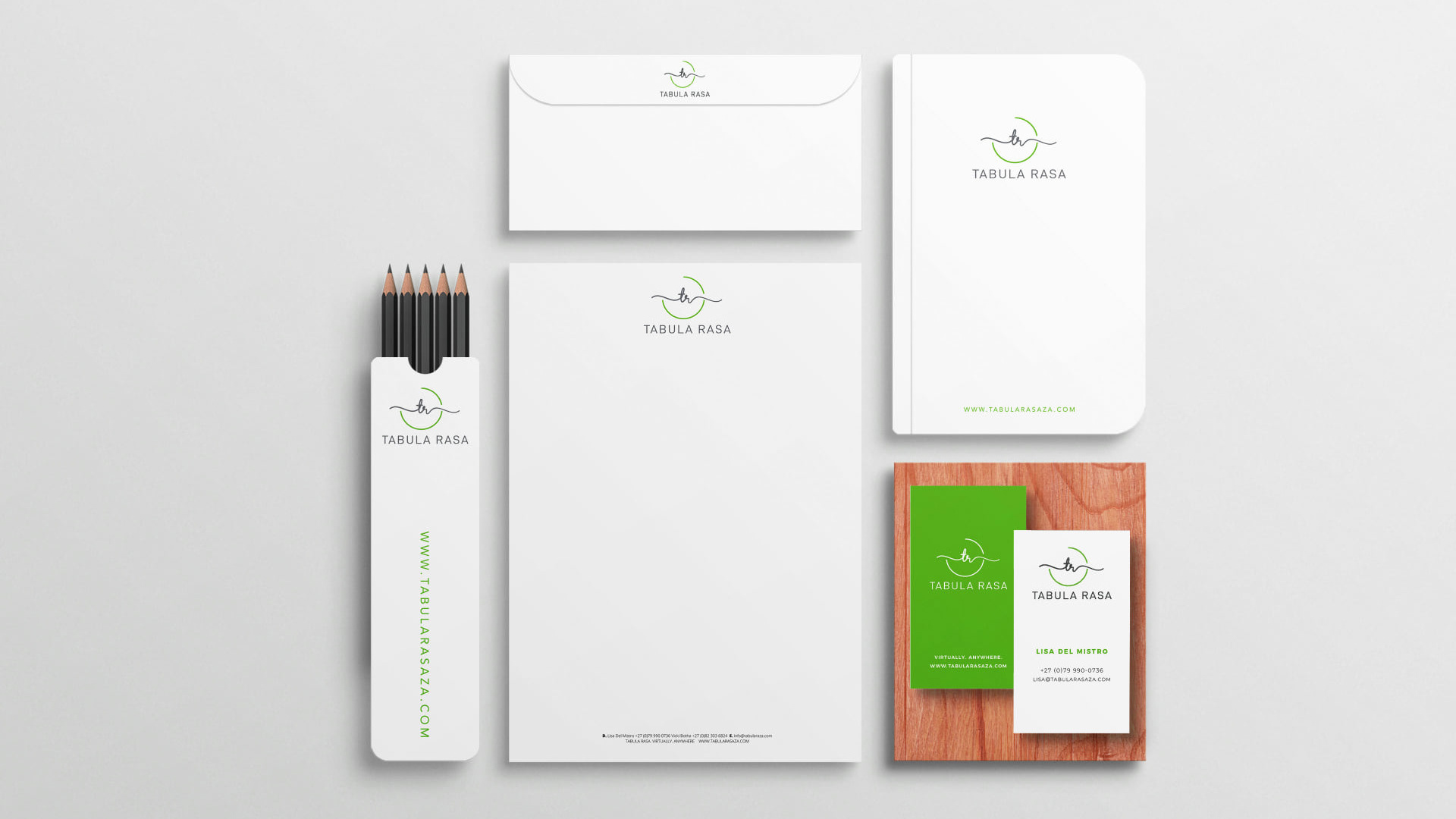
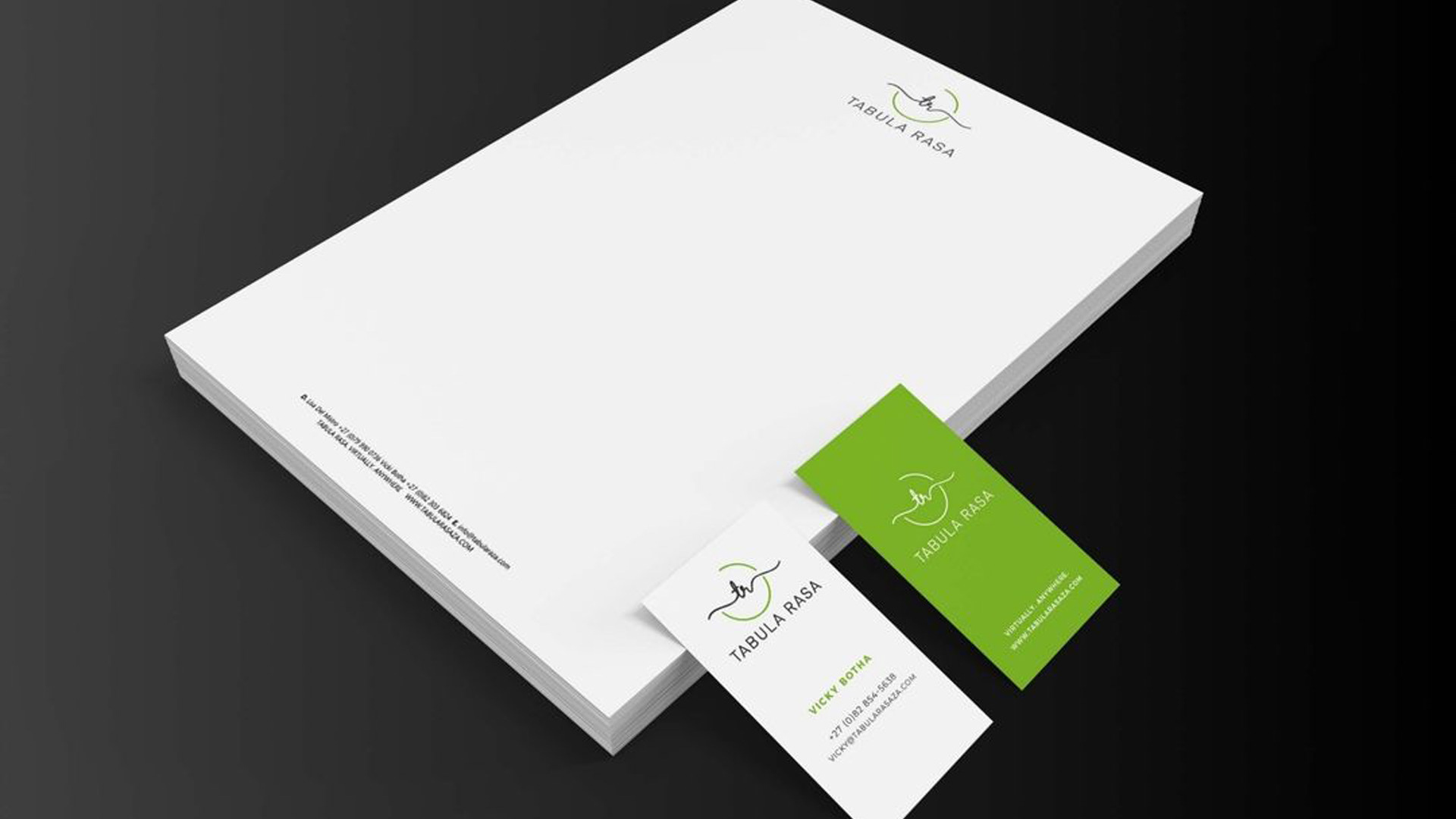
Green was chosen to communicate growth, renewal, stability, and progress. Grey supported the system with neutrality, objectivity, and professionalism.
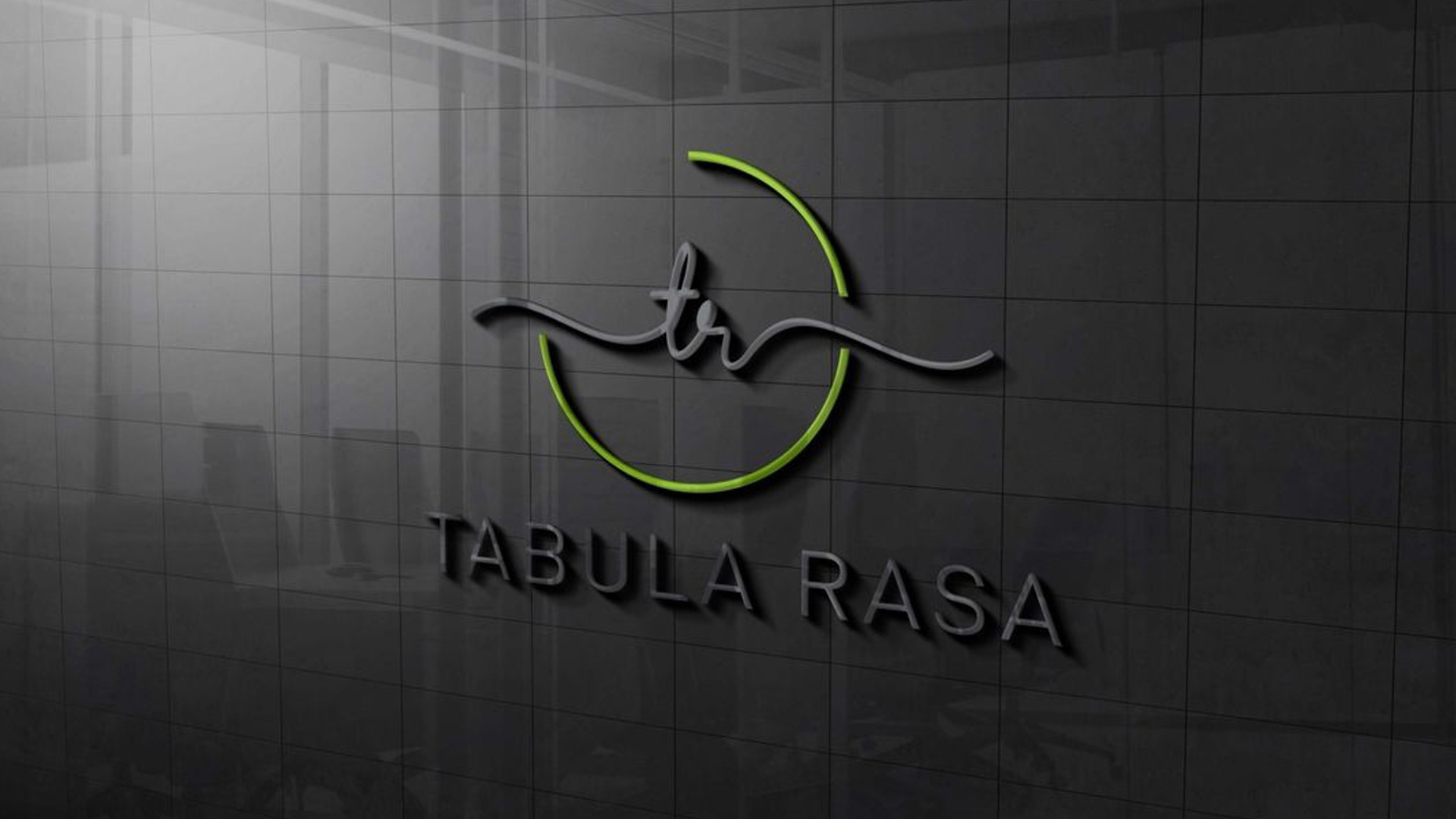
The broken circle became an important strategic device. A complete circle can suggest closure, repetition, and closed-loop thinking. By contrast, the broken circle introduced movement, openness, and the idea that change begins when old patterns are interrupted.
The lowercase “t” and “r” were intentionally understated. They placed the client, not the consultancy, at the centre of the relationship. This reflected the business philosophy: Thabula Rasa was not there to dominate the room, but to help the client see the room more clearly.
The handwritten script introduced a signature-like quality, suggesting trust, personal commitment, and advisory partnership.
As a secondary symbolic reference, the praying mantis gave the brand a deeper layer of meaning. Associated with patience, perception, stillness, guidance, and deliberate action, it supported the consulting values of observation before intervention and wisdom before execution.
Outcome
Thabula Rasa was created as a clean, strategic, and meaningful consulting brand built around the concept of the blank slate. The identity gave the company a professional foundation from which to enter the market with clarity and confidence.
Although the company later closed after the founding partnership split when one of the partners moved to Germany, the project remains a strong example of early-stage brand strategy: building the foundation before the design, defining the market position before the visual system, and creating a brand idea that could guide both business development and creative execution.