INTERNAL COMMUNICATION | EMPLOYEE ENGAGEMENT | WELLNESS STRATEGY
Executive Snapshot
During a three-year consulting relationship with Telesure, I translated internal culture priorities into campaigns employees could understand and act on.
How could a space theme make wellbeing useful to young call-centre employees facing demanding targets, back-to-back calls and mental fatigue?
The Communication Challenge
The core audience was employees aged 18 to 27 across three offices. Previous wellness events reached about 2,667 of 5,500 employees, or 49% of the workforce.
Employees were time-poor and sceptical of HR messages disconnected from working conditions. They needed choice, practical value and activities that could fit into short breaks. The campaign also had to support the corporate space theme without turning wellbeing into a visual gimmick.
My Role
As Brand Strategist and Creative Consultant, I led audience analysis, communication strategy, messaging, campaign development and creative direction.
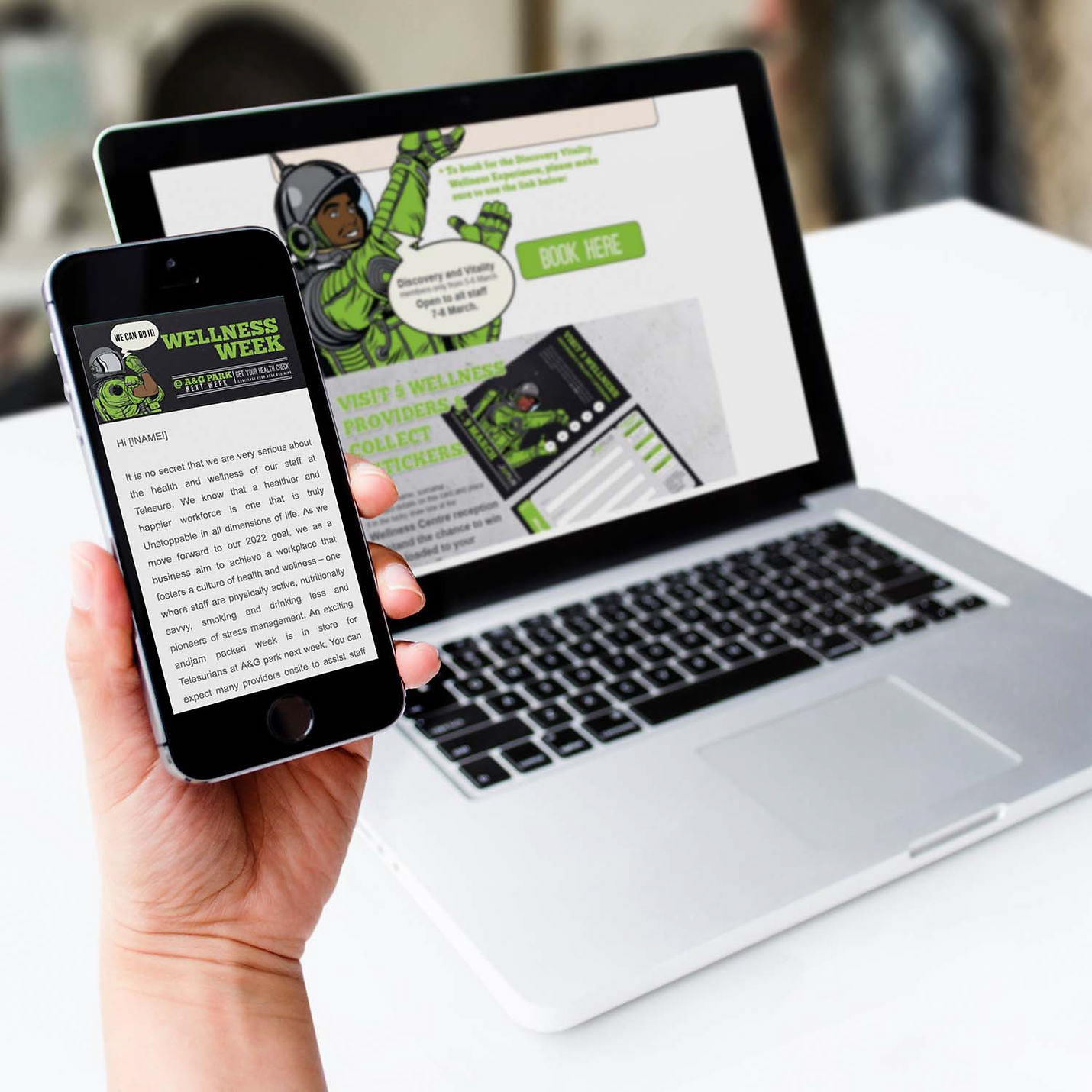
I created the central idea, participation framework and toolkit, then directed its application across office screens, emails, posters, illustrated assets and event materials.
The Communication Response
I repositioned wellness as “relief you can use today.” The campaign replaced idealised lifestyle promises with small actions that felt realistic within a demanding shift.
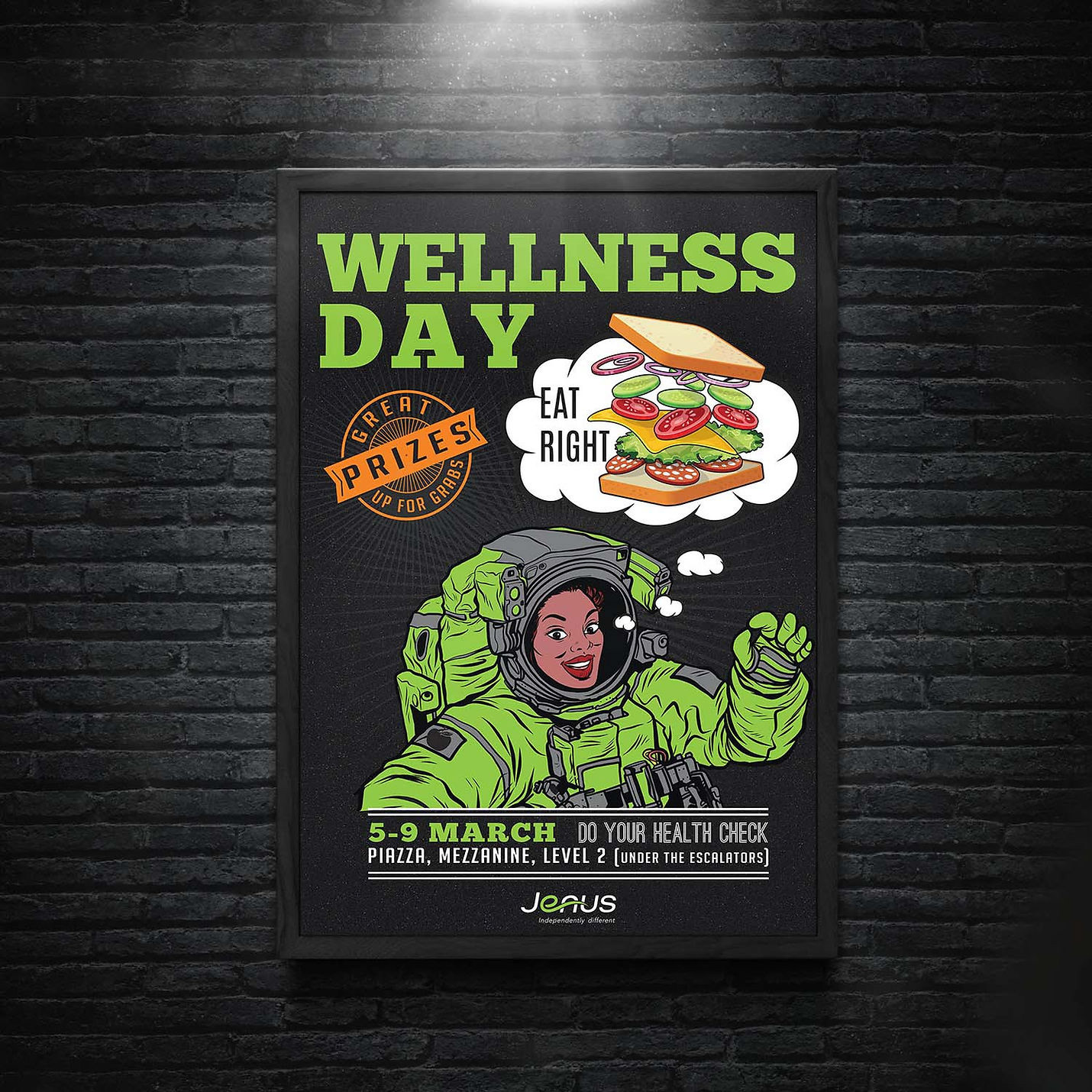
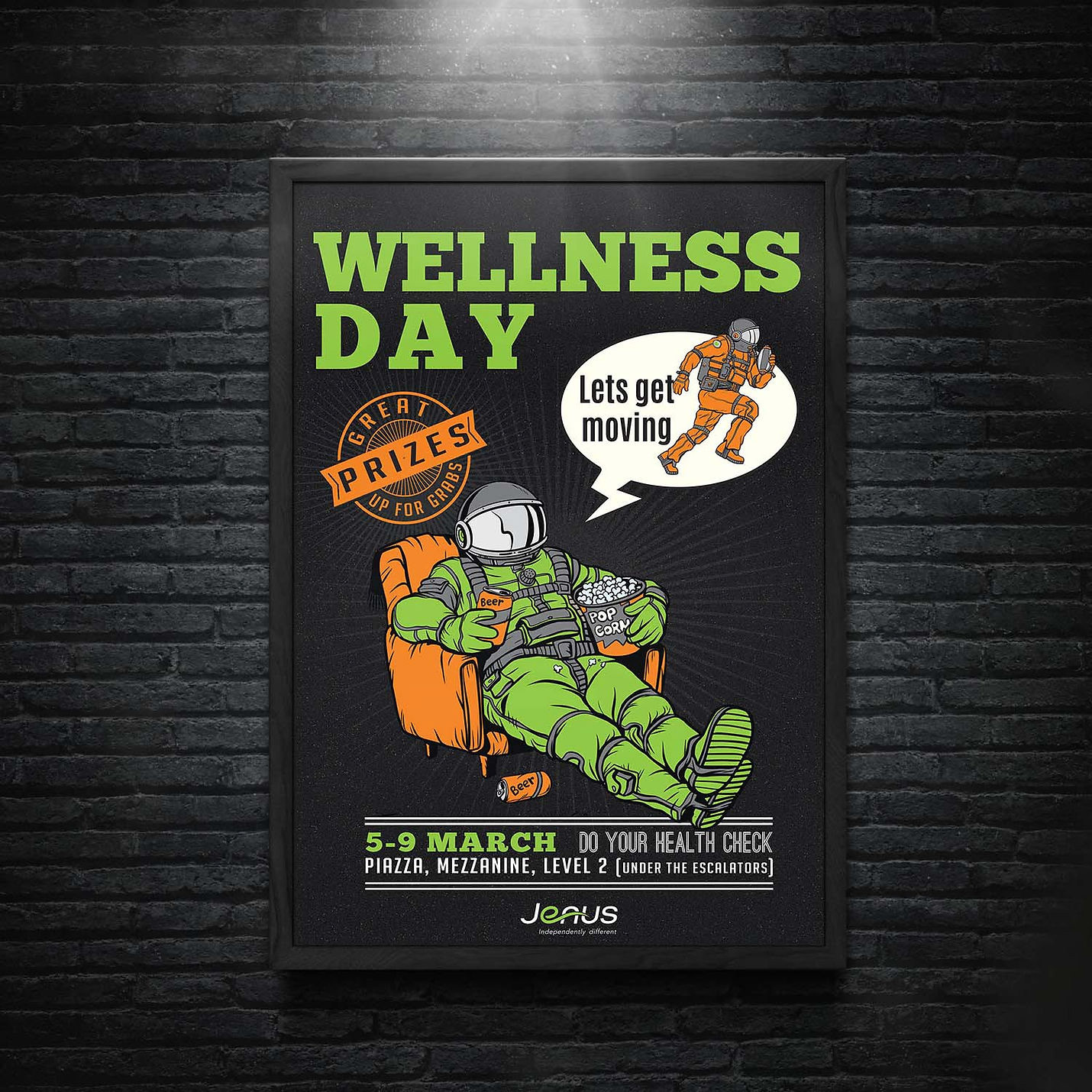
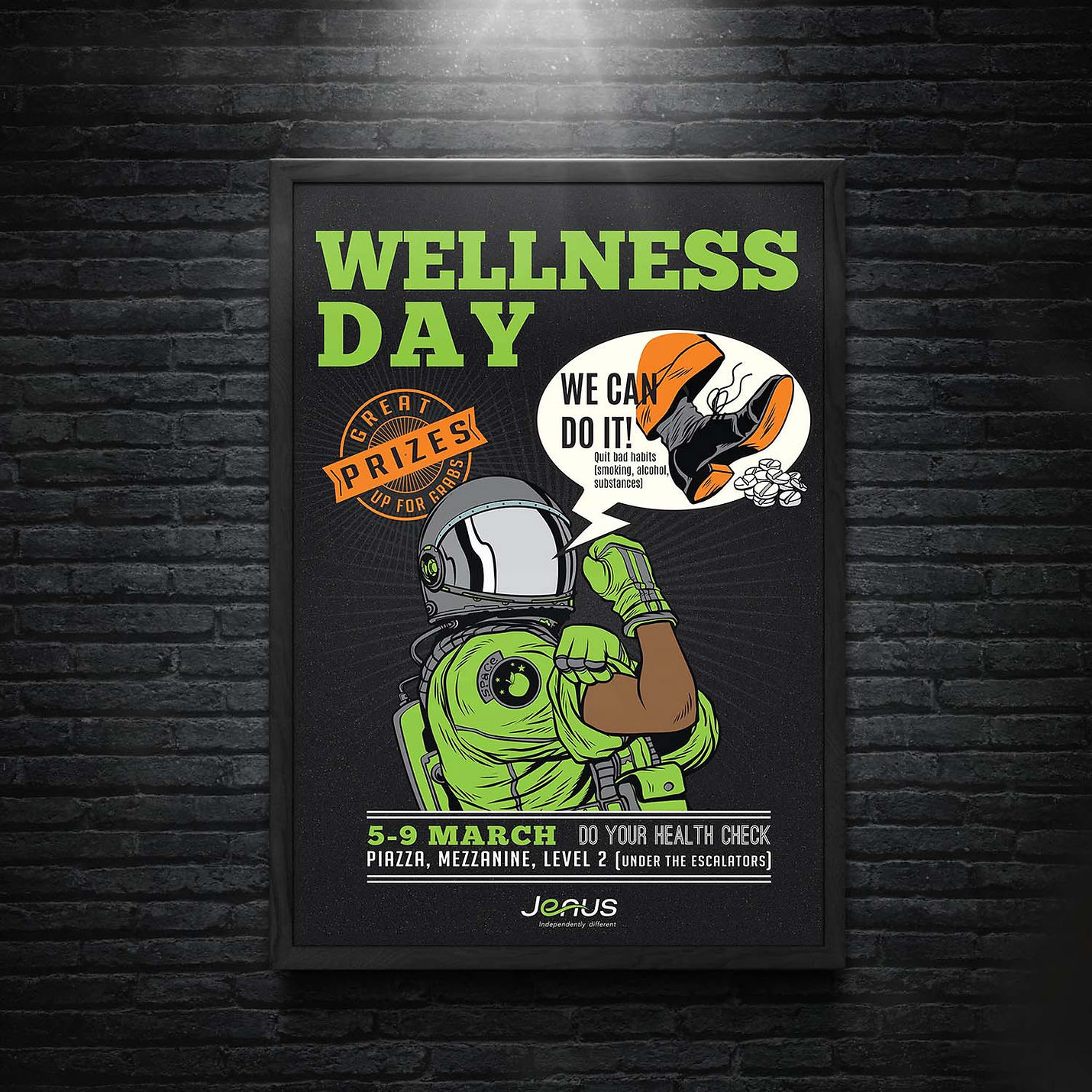
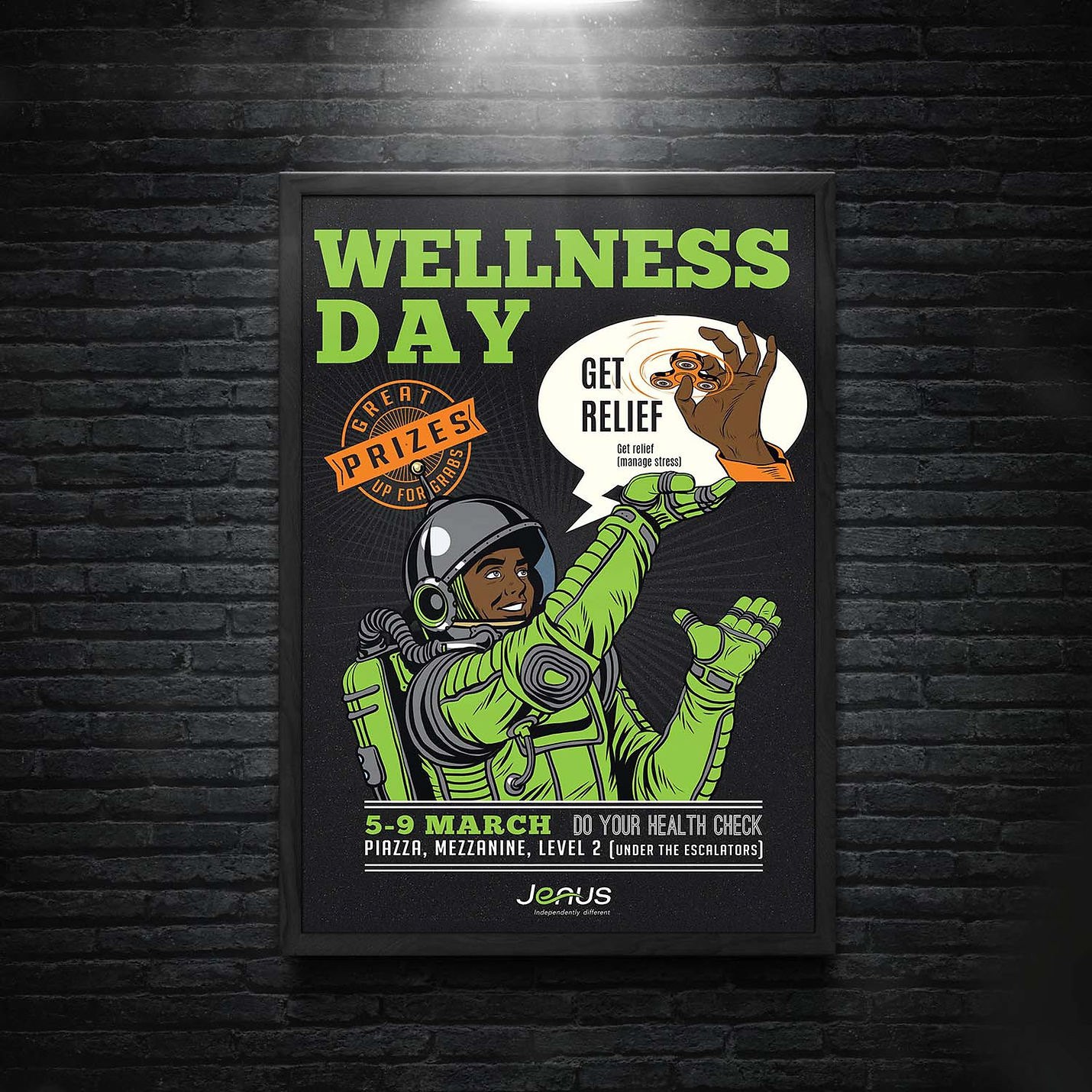
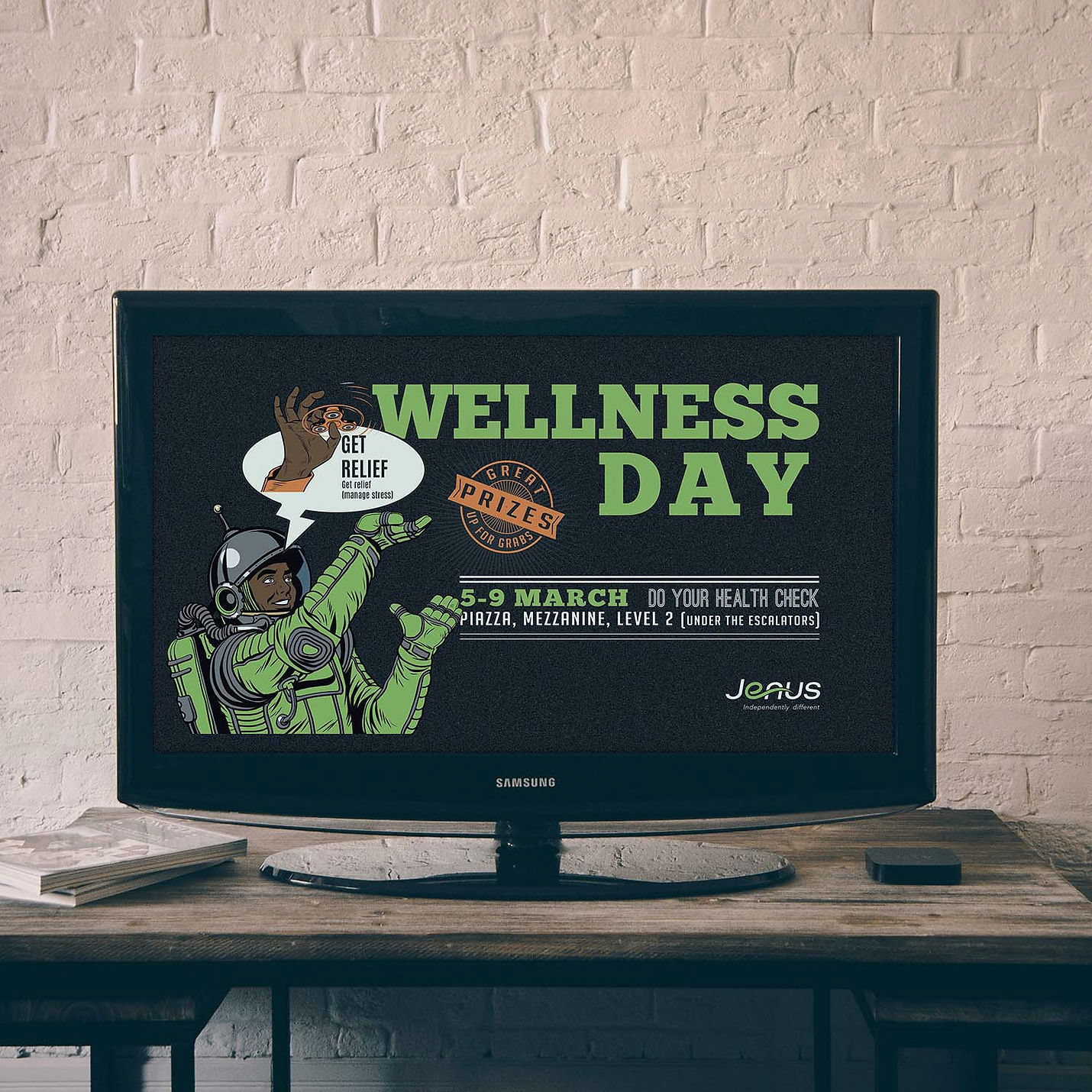
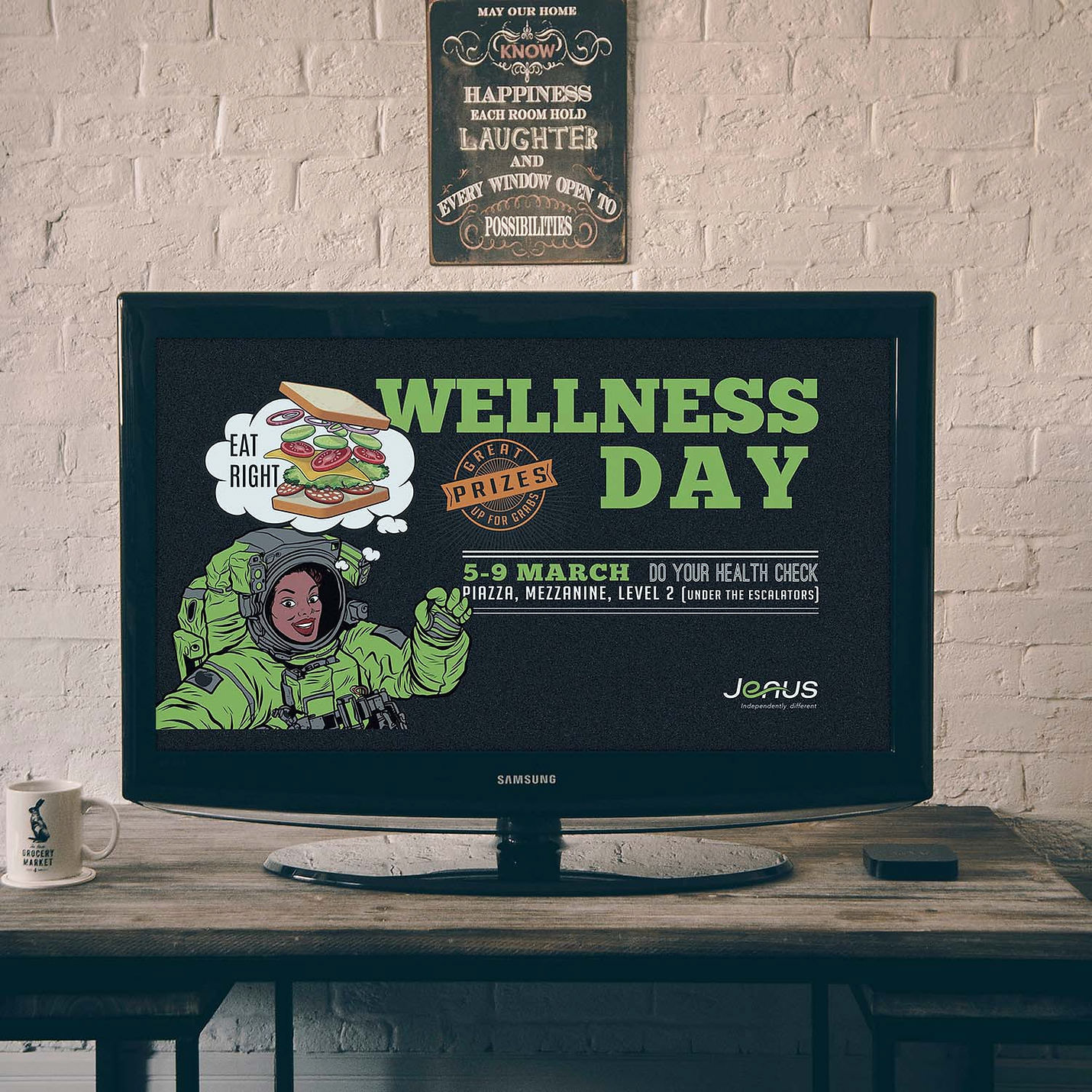
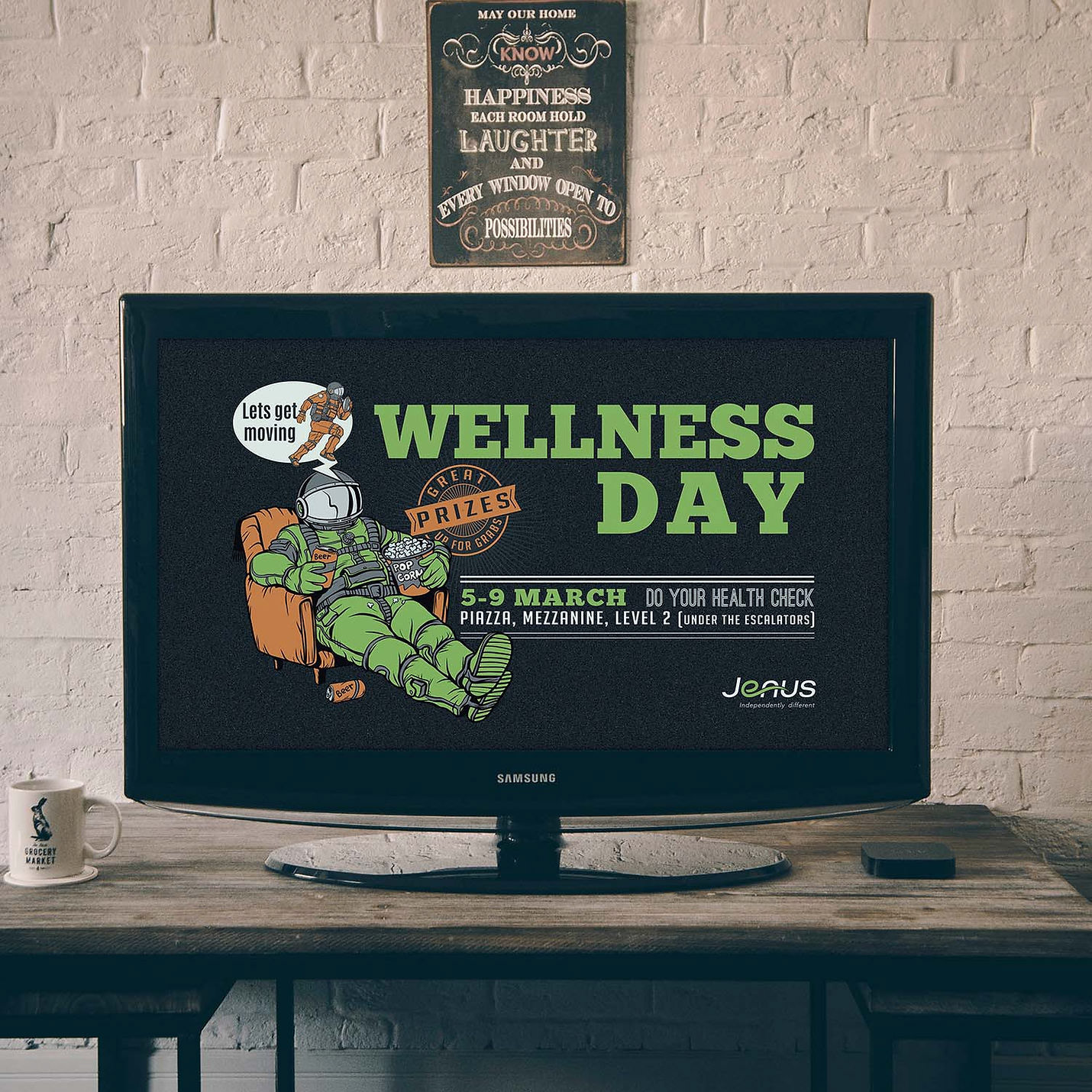
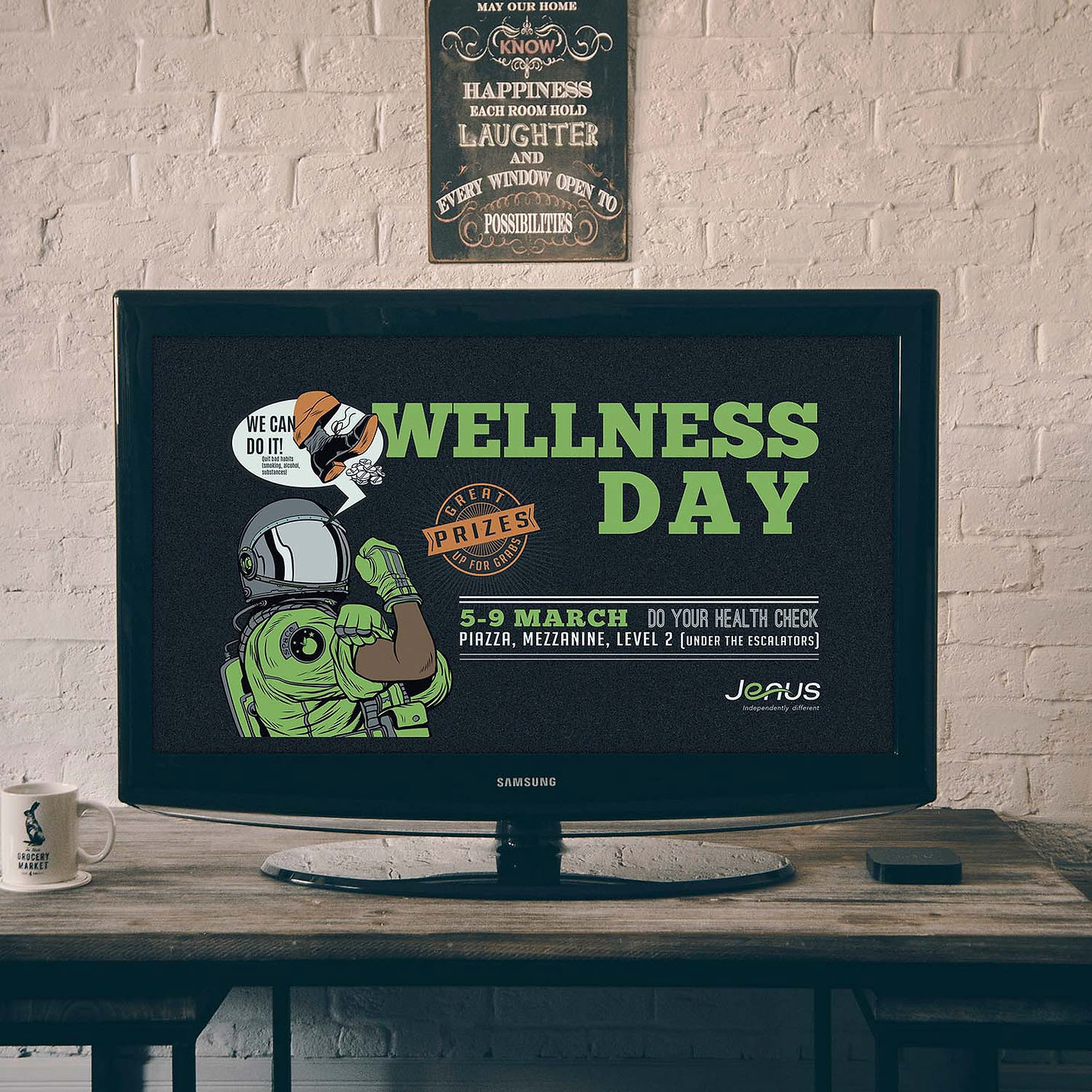
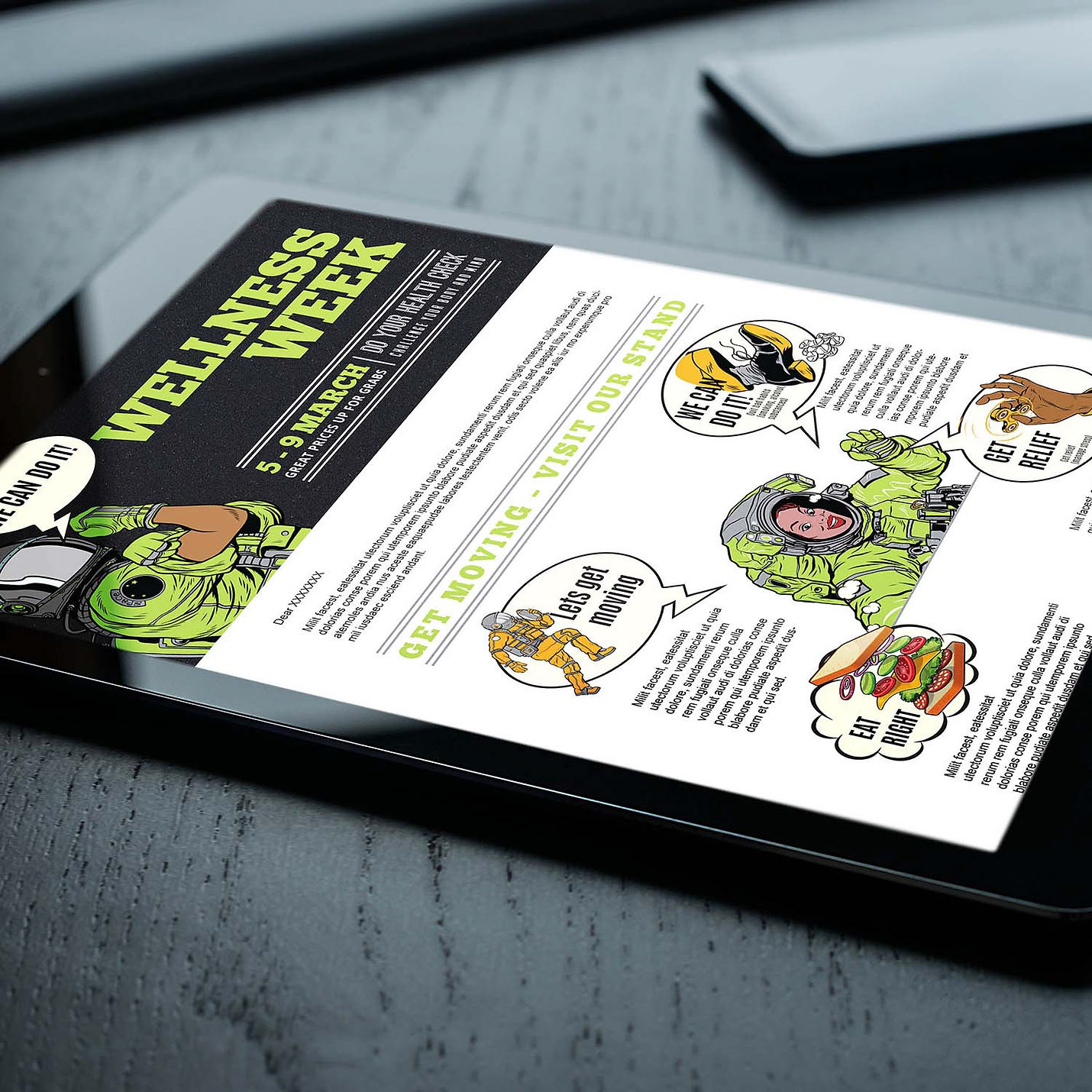
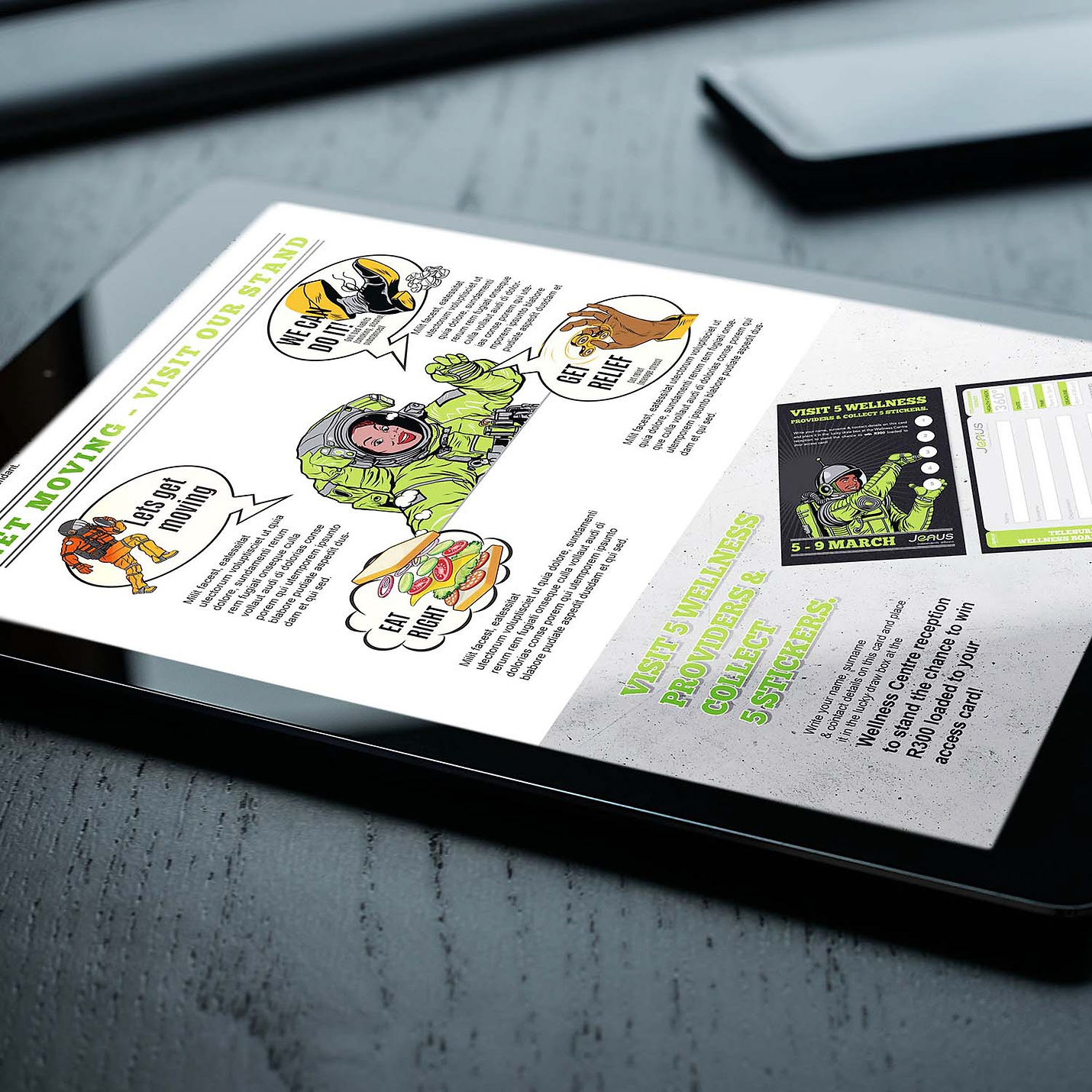
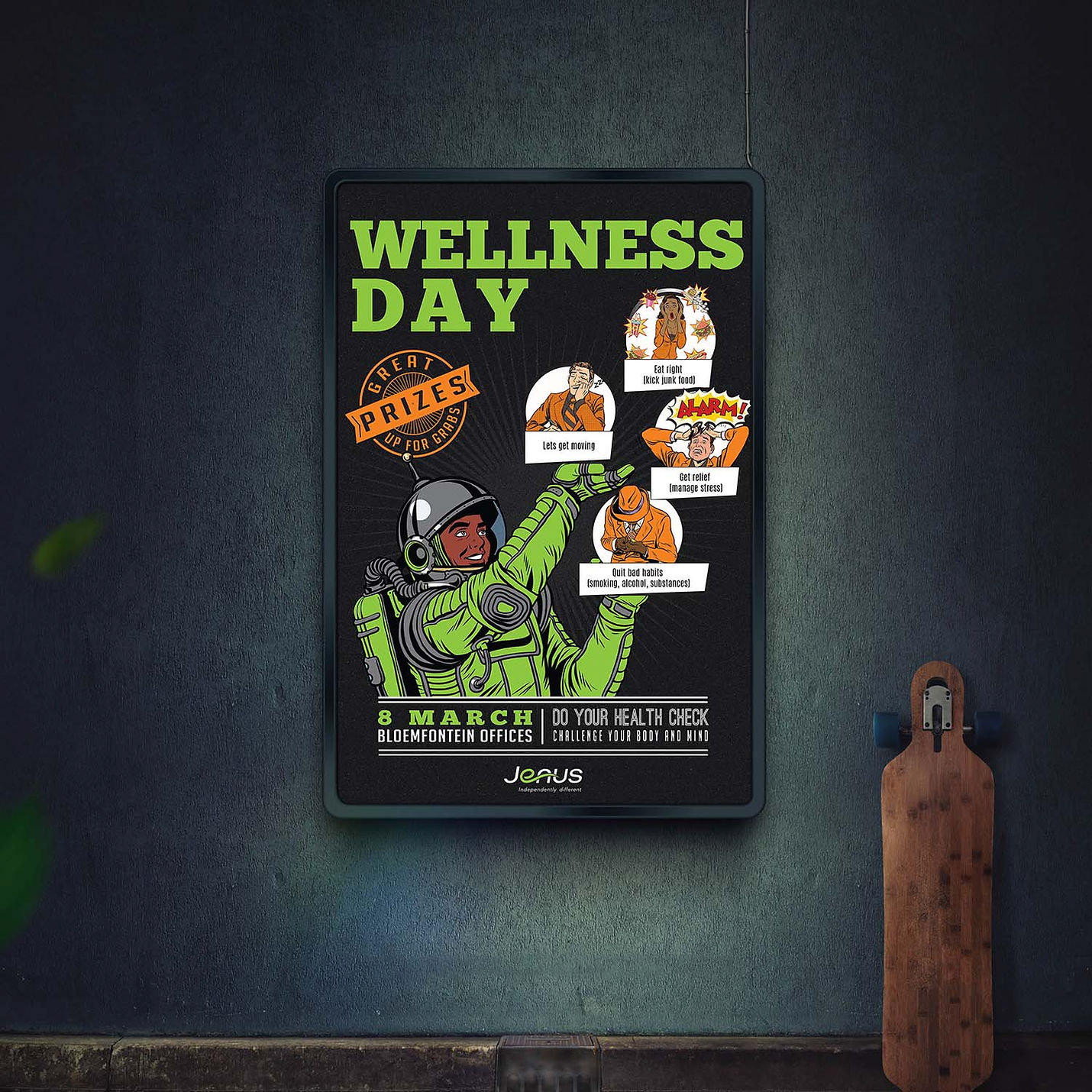
Employees could choose from four mission tracks: Move, Eat Right, Get Relief and Quit Bad Habits. “Missions” made participation feel short and achievable while connecting with the company’s space-led vision.
Stars represented where the organisation wanted to go. Missions represented practical steps employees could take now. Space became the communication framework, while relief remained the employee promise.
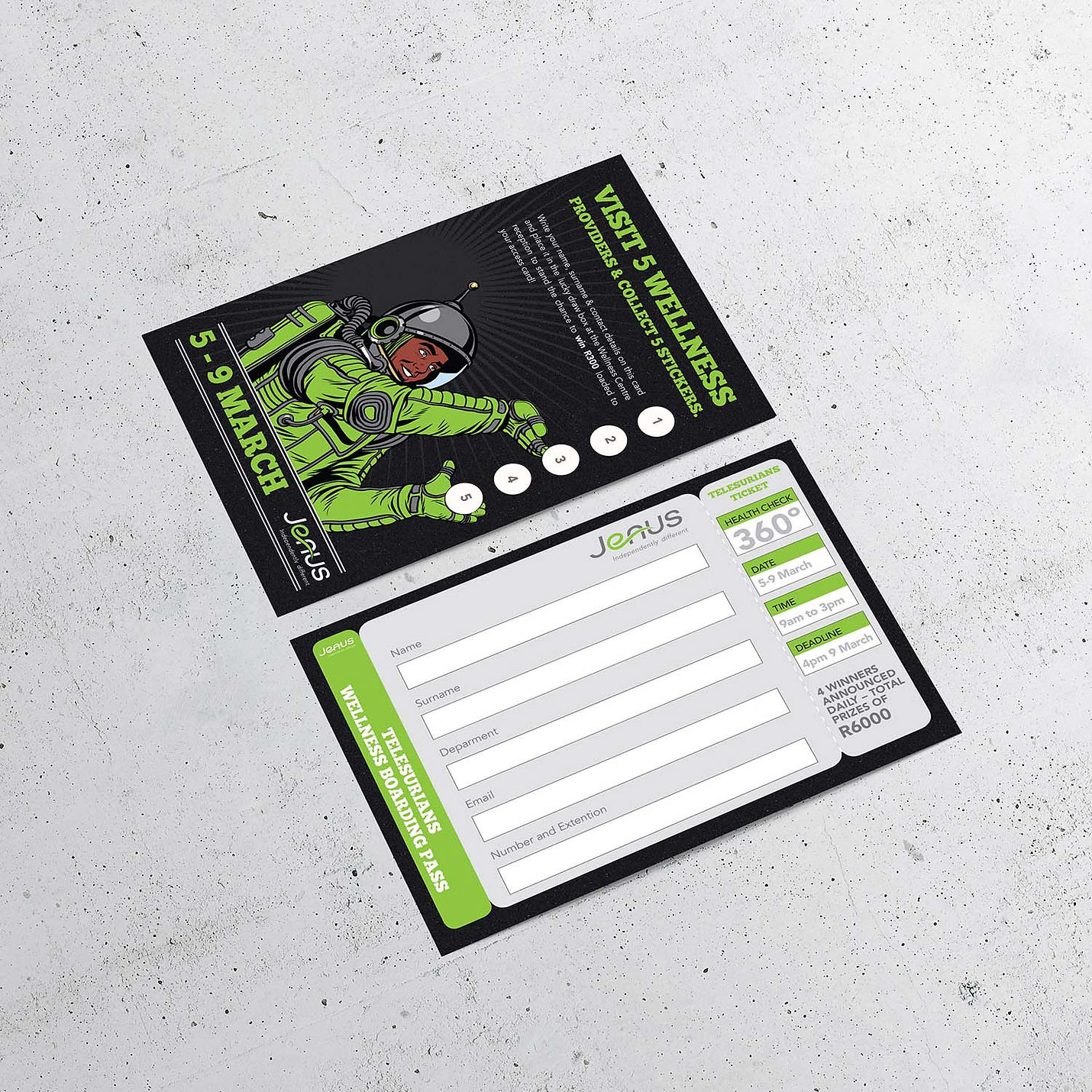
Short messages and bold visual hierarchy worked across screens and shared spaces. Repeated prompts built recognition without demanding long attention. A boarding-pass and sticker mechanic made participation visible and easier to join.
Business and Communication Value
Participation reached approximately 3,200 of 5,500 employees, or 58%. This represented 533 more participants than the previous cycle and a reported increase of about 20%.
The campaign showed that internal communication could respect a pressured workforce while supporting the corporate brand. It turned wellness from another HR message into a clear employee experience.
What This Project Demonstrates
Internal communication strategy, employee engagement, audience analysis, workplace wellbeing, behavioral messaging, campaign development, creative direction and multi-site rollout.
View the Campaign
The project shows how audience understanding and practical communication can move employees from awareness to participation.
View the Telesure Wellness Week Campaign