We Left Before Sunrise, but the Best Part of the Hike Was the Woman Walking Beside Us
At four in the morning, very little feels reasonable. The house is quiet, the sky is still completely black, and every sensible part of you is arguing that sleep would be a far better use of the next few hours. Coffee becomes less of a drink and more of a survival strategy. Boots go on, bags are checked, layers are added, and somewhere in the middle of all of it you remember that this was your own idea.
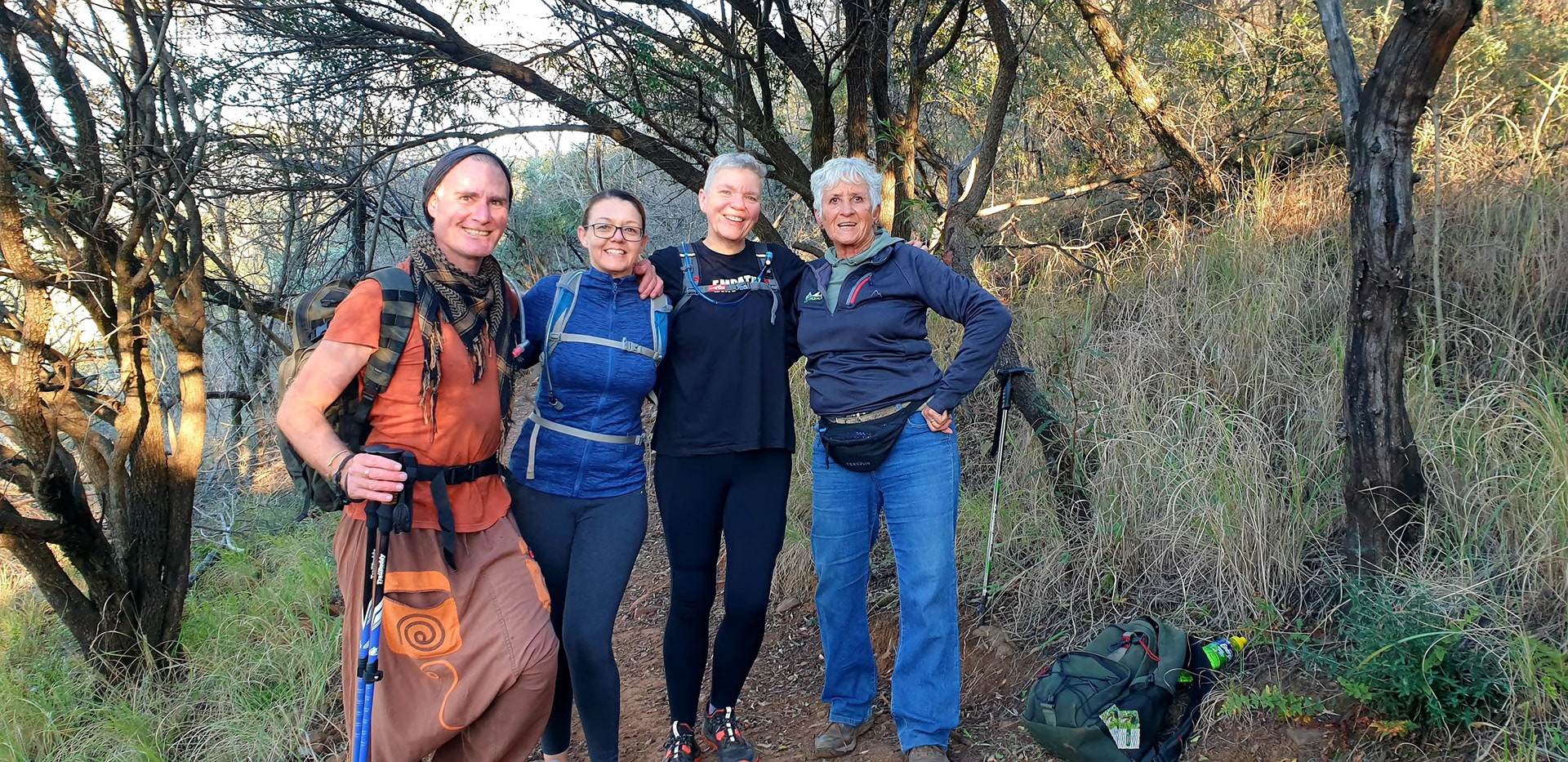
We were heading to Vergenoeg with Jaco, Sam and Eve, hoping to catch the sunrise before the day properly began. By the time we started walking, the temperature was around five degrees Celsius. Cold enough for South Africans to take it personally. The trail appeared in fragments beneath our lights: loose stone, pale sand, scrub, the occasional shape of a rock waiting to catch an inattentive foot. Conversation was sparse at first. At that hour nobody is at their intellectual best, and most energy is spent wondering whether fingers will ever regain feeling. Then the sky began to change.
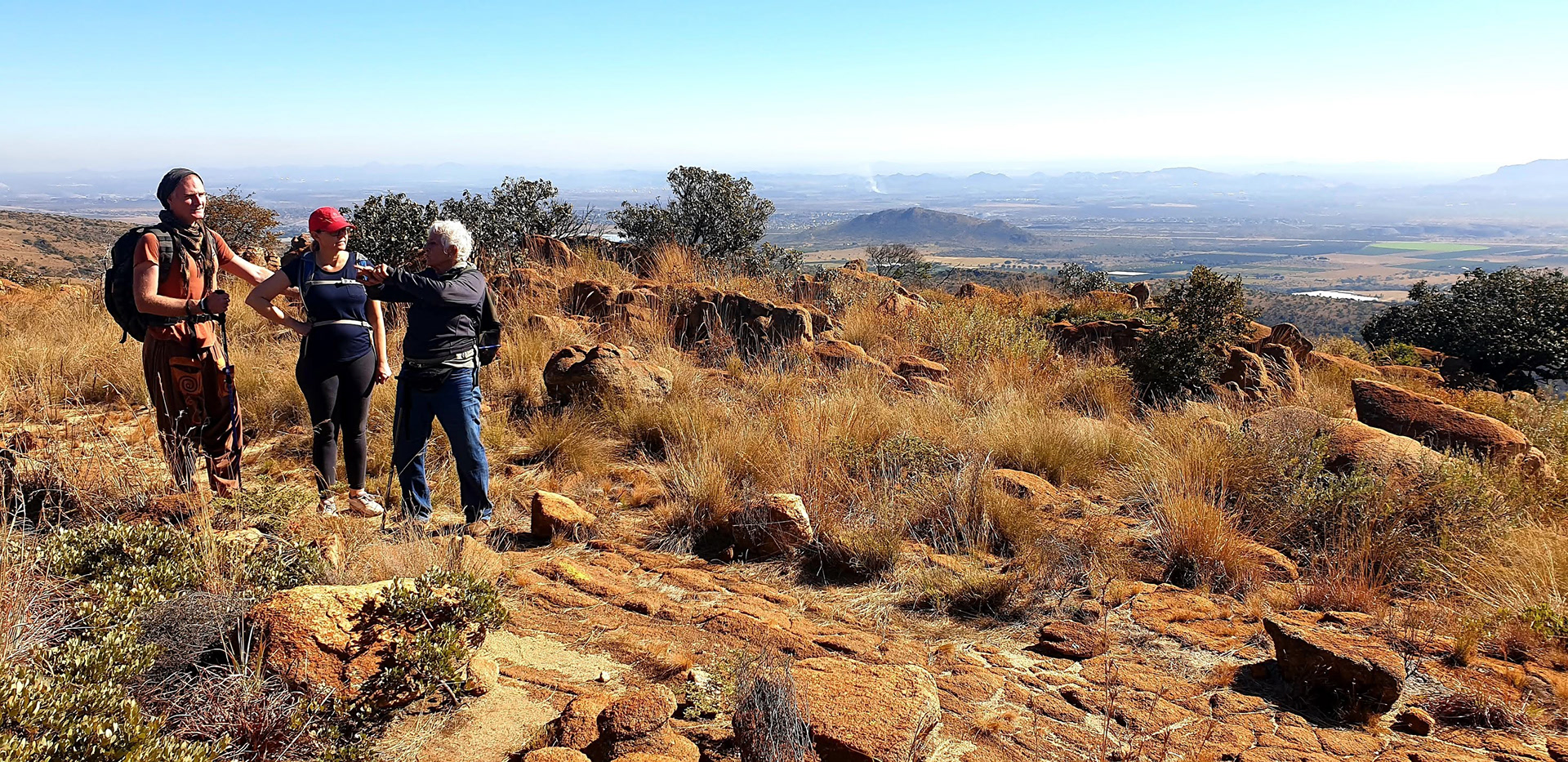
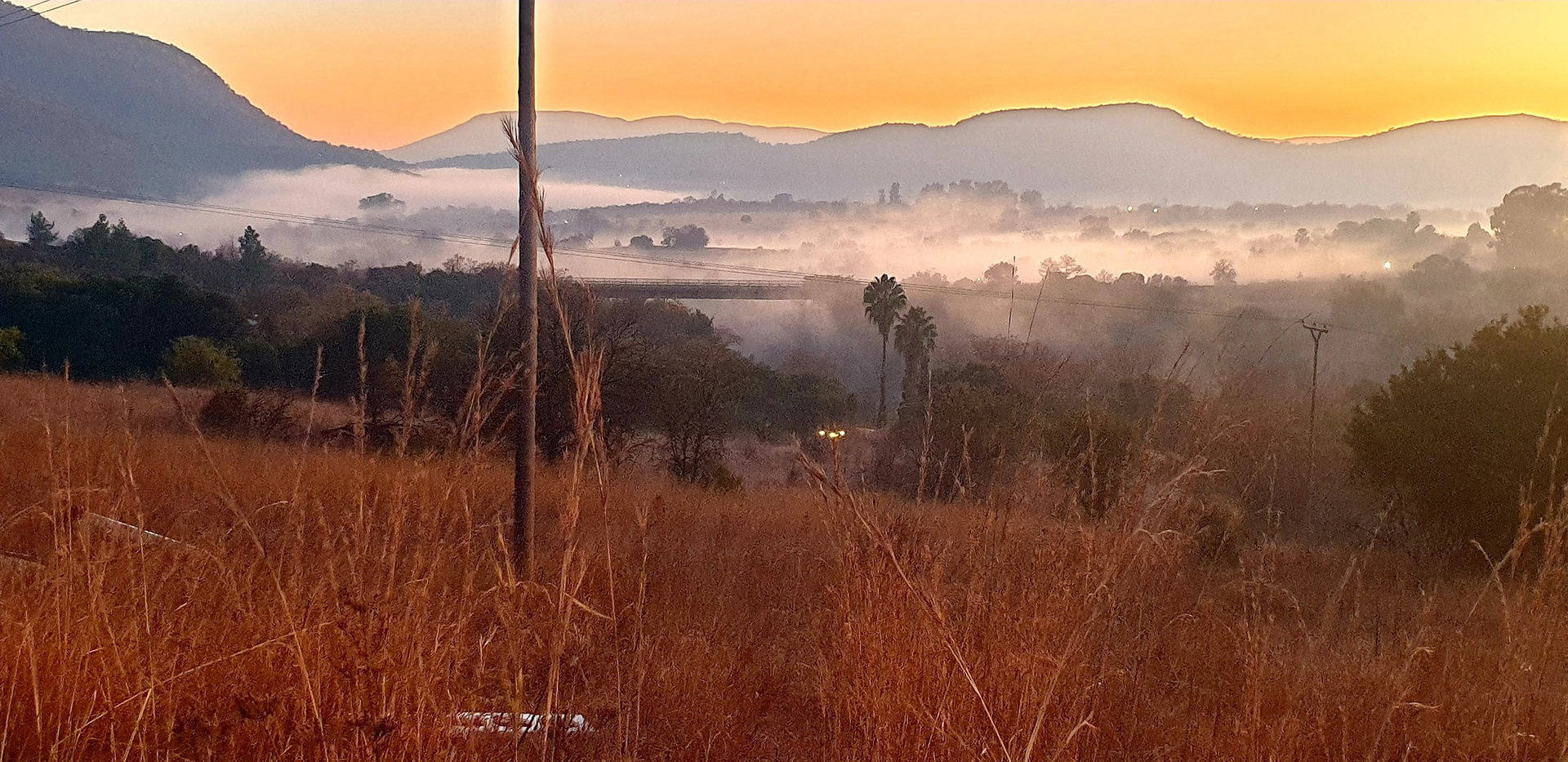
The black softened into deep blue. The edges of the hills slowly separated from the darkness, and the valley below us began to appear through a layer of mist. It was one of those moments that arrive quietly and then suddenly make everyone stop. The mist sat low between the folds of the land while the first sunlight reached the higher ground, catching ridges and vegetation in warm light. Minutes earlier there had been almost nothing to see. Now the whole landscape seemed to be opening in front of us. That is one of the things I love about starting early. You do not simply arrive somewhere beautiful. You watch it become visible.
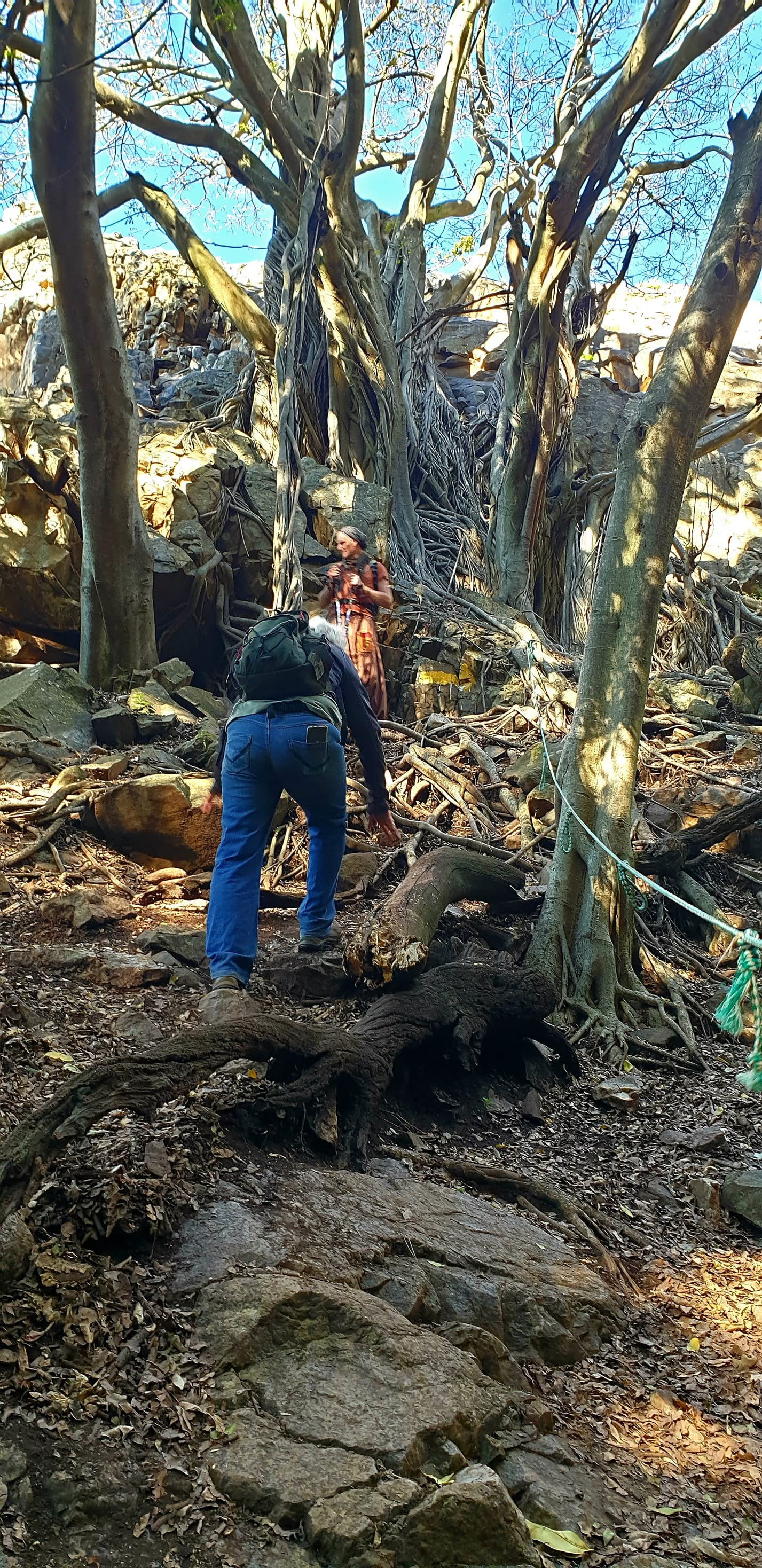
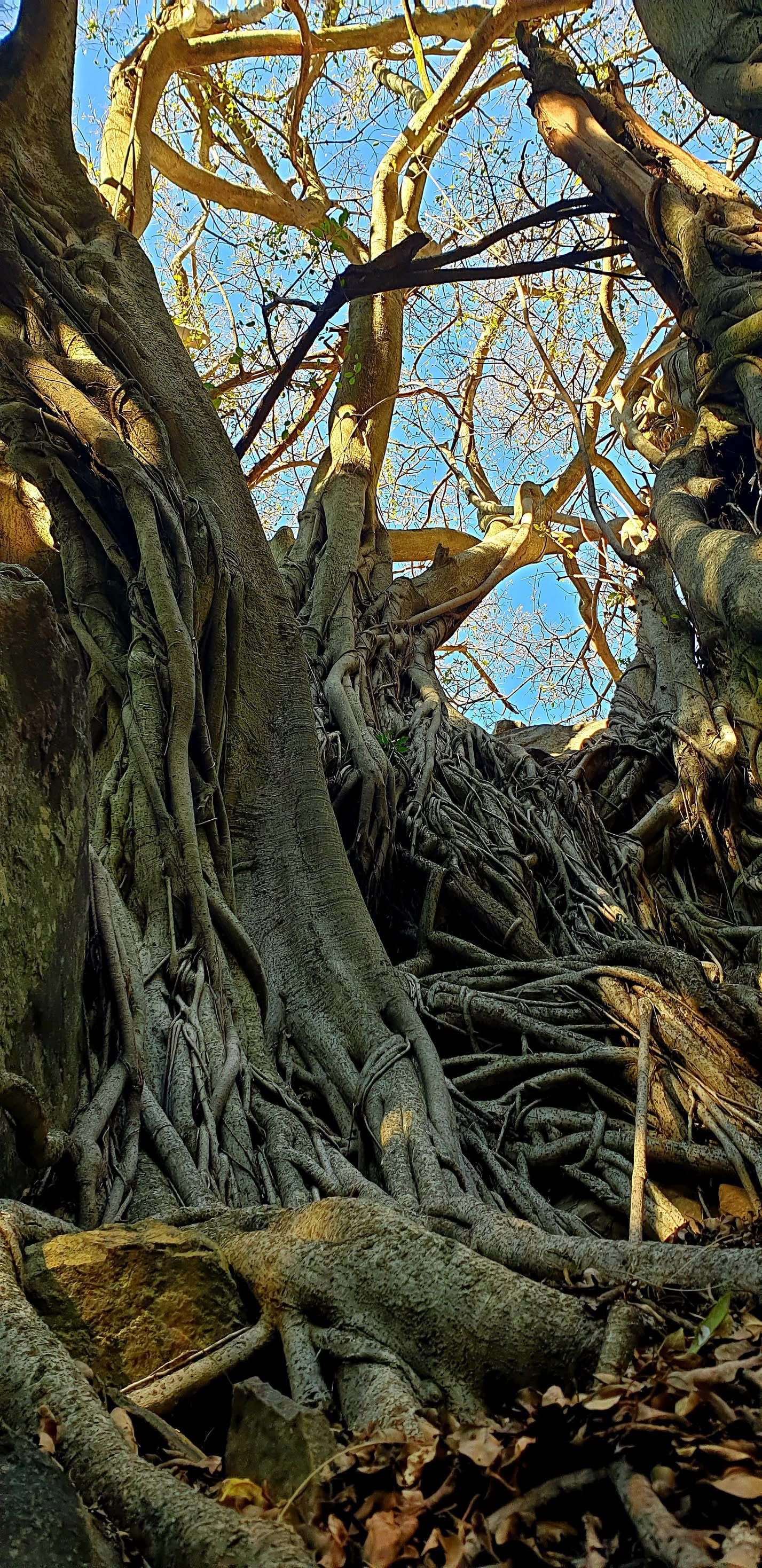
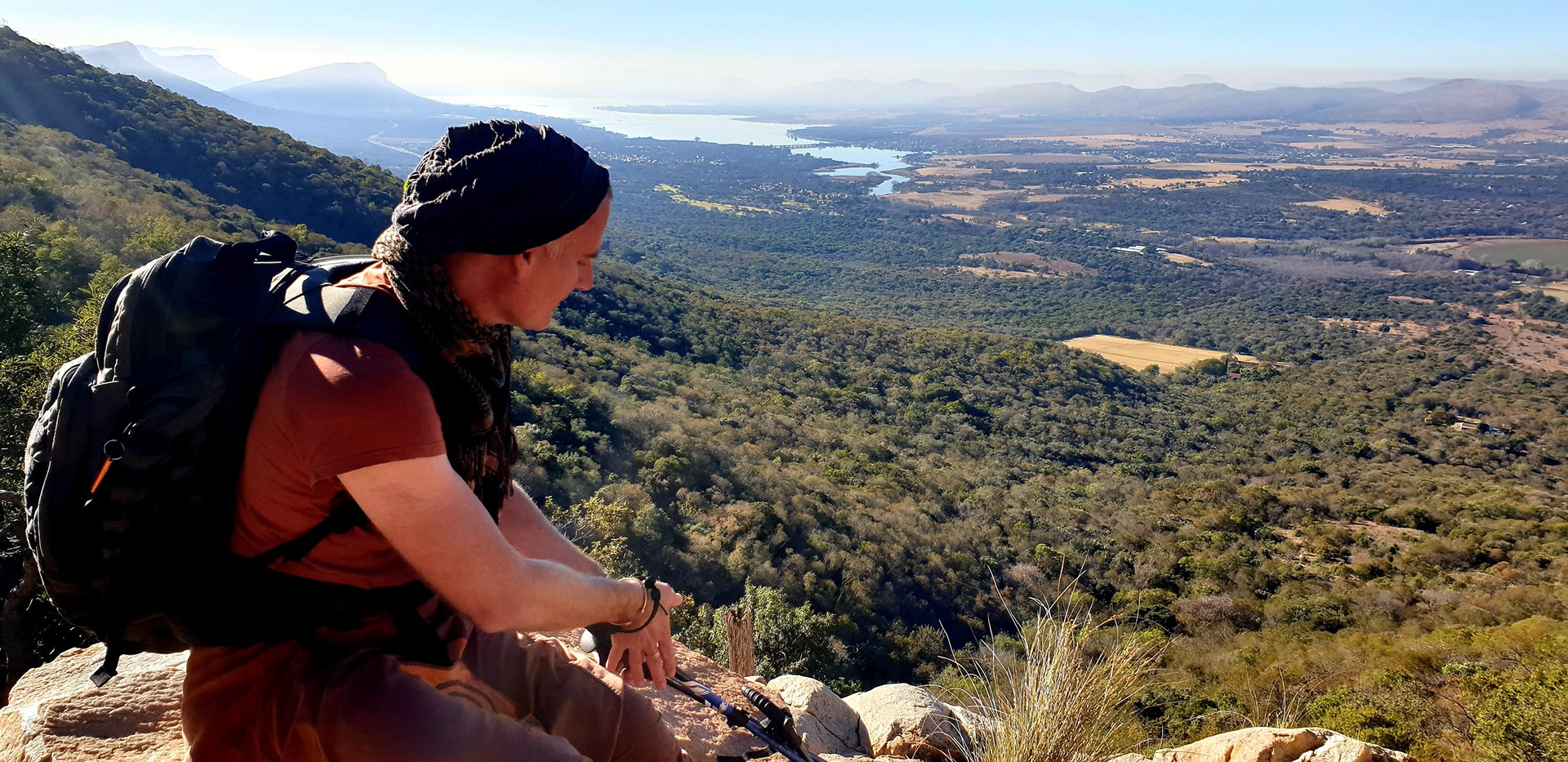
Vergenoeg is not a trail that allows you to remain poetic for long. The ground soon demands attention. There are steep sections, loose rock, sandy areas that shift under your boots and drops that make you considerably more interested in balance than photography. The rhythm becomes simple: step, breathe, watch the ground, look up, stop, start again. On a climb, the world can shrink to whatever is immediately in front of your feet. Then you turn around.
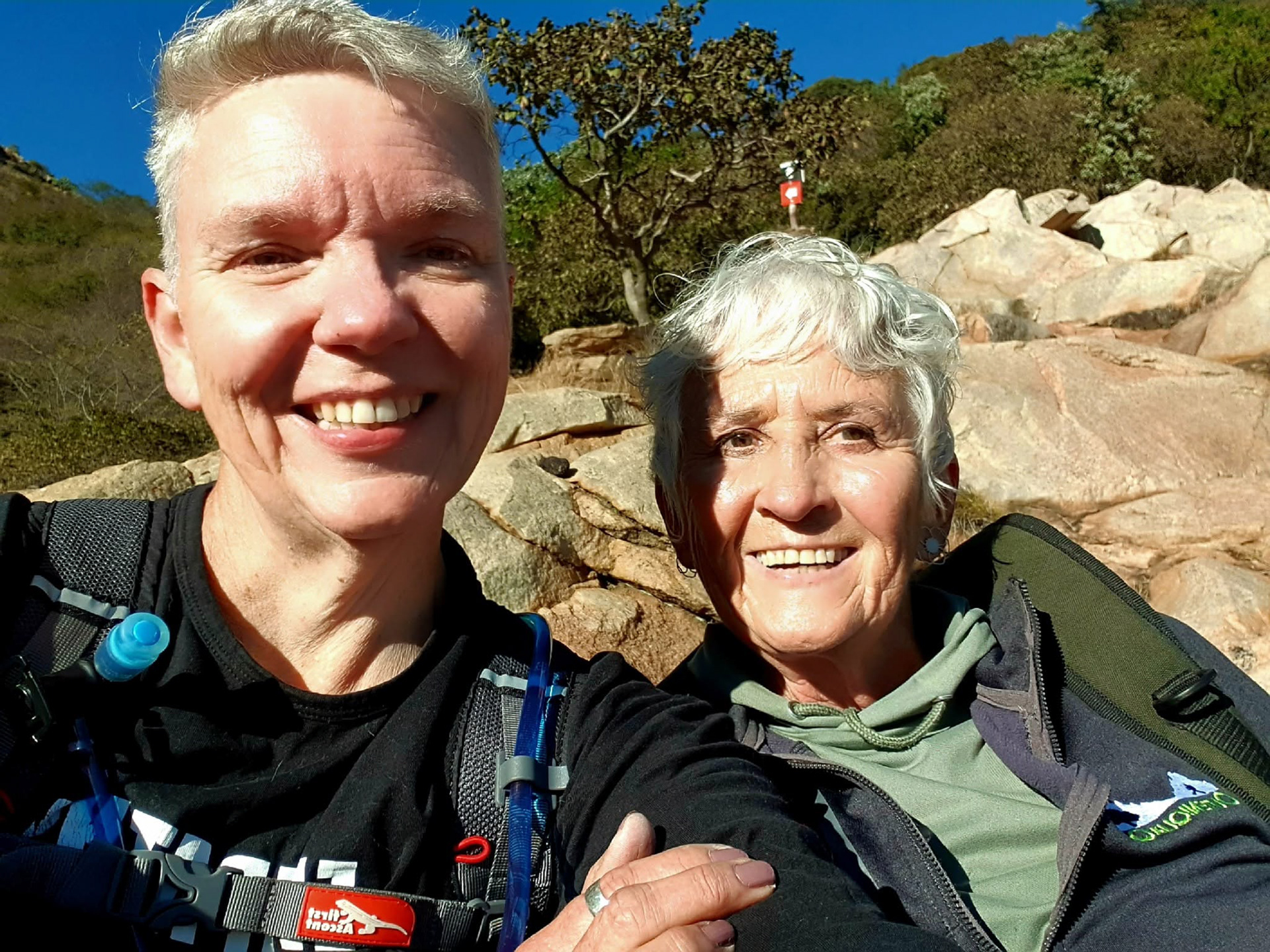
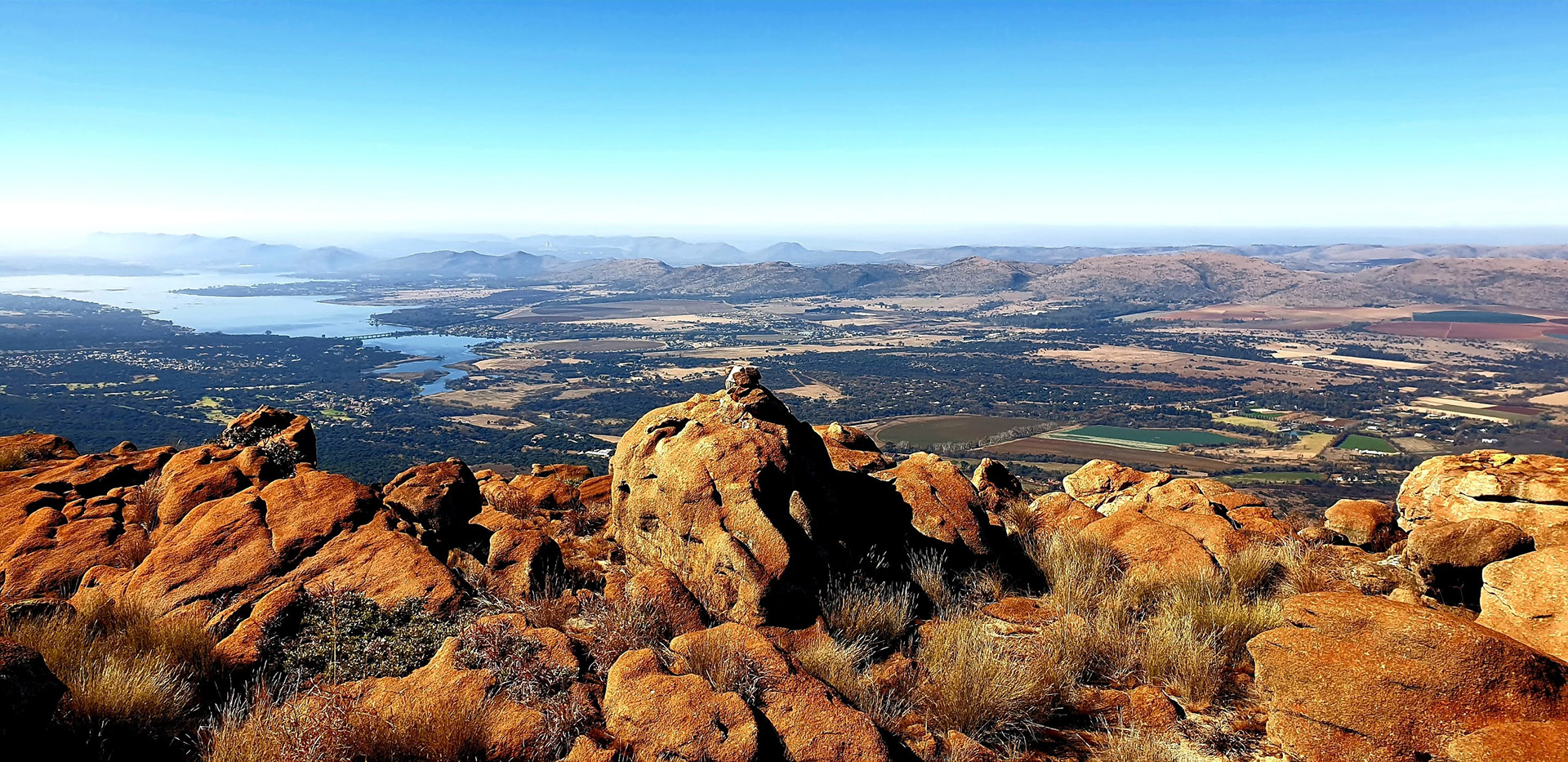
The place you started is suddenly far below you. The valley has changed again. Mist has thinned, the light has strengthened, and all those small steps have quietly added up to distance. That always fascinates me. Progress feels almost invisible while you are making it, yet from higher ground the whole journey becomes obvious. Eve was walking with us, and Eve was 76.
Her age mattered far more to the rest of us than it seemed to matter to her. She moved steadily, without fuss, without the performance people sometimes attach to doing something difficult later in life. She simply walked. There was no speech about proving that age was just a number. She had no need for one.
At some point she told us that she had only started running at 44. That stopped me. We are taught to think of new beginnings as belonging to the young, as though curiosity has an expiry date and our bodies quietly close the doors behind us. Eve had clearly ignored that instruction. She went on to run Comrades Marathons, which for anyone outside South Africa is not a pleasant little weekend jog. It is an ultramarathon between Durban and Pietermaritzburg, a distance most sensible people would prefer to cover in a vehicle. Eve had done it, and more than once. Beer, I learned, had also featured in the celebrations afterwards, which made the whole story better.
As we continued, the conversation moved from running to her husband. They had been married for more than 50 years. When Eve returned from a hike, he would have a meal waiting and the table set. During load shedding, when South Africa’s electricity supply once again decided to take the evening off, he would put out candles. That detail stayed with me. Not the ultramarathons. Not even the fact that she was still walking mountains at 76. The candles.
There was something wonderfully ordinary about it. Fifty years of marriage reduced to a simple act of care: food waiting, a table prepared, candles when the lights were out. We tend to make love very dramatic when we talk about it, but perhaps the real version is much quieter. Someone knowing you will come home tired and making sure there is something warm waiting for you.
The mountain carried on around us while we talked. The cold of the morning disappeared, layers came off, and the landscape opened wider as we climbed. Birds moved through the vegetation. The trail alternated between sections that invited conversation and others where everyone became suddenly silent because loose rock was demanding full concentration. Jaco, meanwhile, appeared to remain alert for the possibility of somebody slipping, not necessarily so that he could assist, but because photographic evidence would apparently be valuable later. Every hiking group needs someone committed to historical accuracy.
By the time we began descending, our legs had become very aware of what we had asked of them. Going downhill always sounds easier in theory. Gravity is certainly enthusiastic, but knees tend to be less impressed. The same rocks and sandy patches we had climbed over earlier now required a different kind of care. Yet the return journey felt different. We recognised bends in the path, familiar stones and places where earlier we had wondered how much further there was to go. Because we were no longer concentrating on finding the route, we noticed things we had missed on the way up.
That is perhaps one of the quiet pleasures of an out-and-back hike. The path may be the same, but you are not. The light has changed, the weather has changed, your body has changed and your attention has changed with it.
By the time we finished, hunger had become a serious subject. A boerie roll waited at the end, and after hours on a mountain there are few meals that could compete. Boerewors, bread, sauce, tired legs and the satisfaction of sitting down. Fine dining has its place in life, but it would struggle against food eaten after a long hike when you have earned every bite.
I remember the sunrise from Vergenoeg. I remember the cold, the mist in the valley, the loose rock and the view from higher up. But what I remember most is Eve. A woman who started running at 44. Who went on to run Comrades. Who was still hiking mountains at 76. Who spoke casually about a husband who had shared more than half a century with her and still prepared dinner for her return.
We spend so much time worrying about getting older, as though life becomes a narrowing corridor with fewer doors the further we walk. Then every so often you meet somebody who has apparently discovered the opposite. Eve did not tell us that life could remain large. She was too busy walking it.
If it were a story for a Travel Page this would be the photographic brief