Building Future Access Beyond the Rural Divide
This project ended up not going to market due to lack of funding

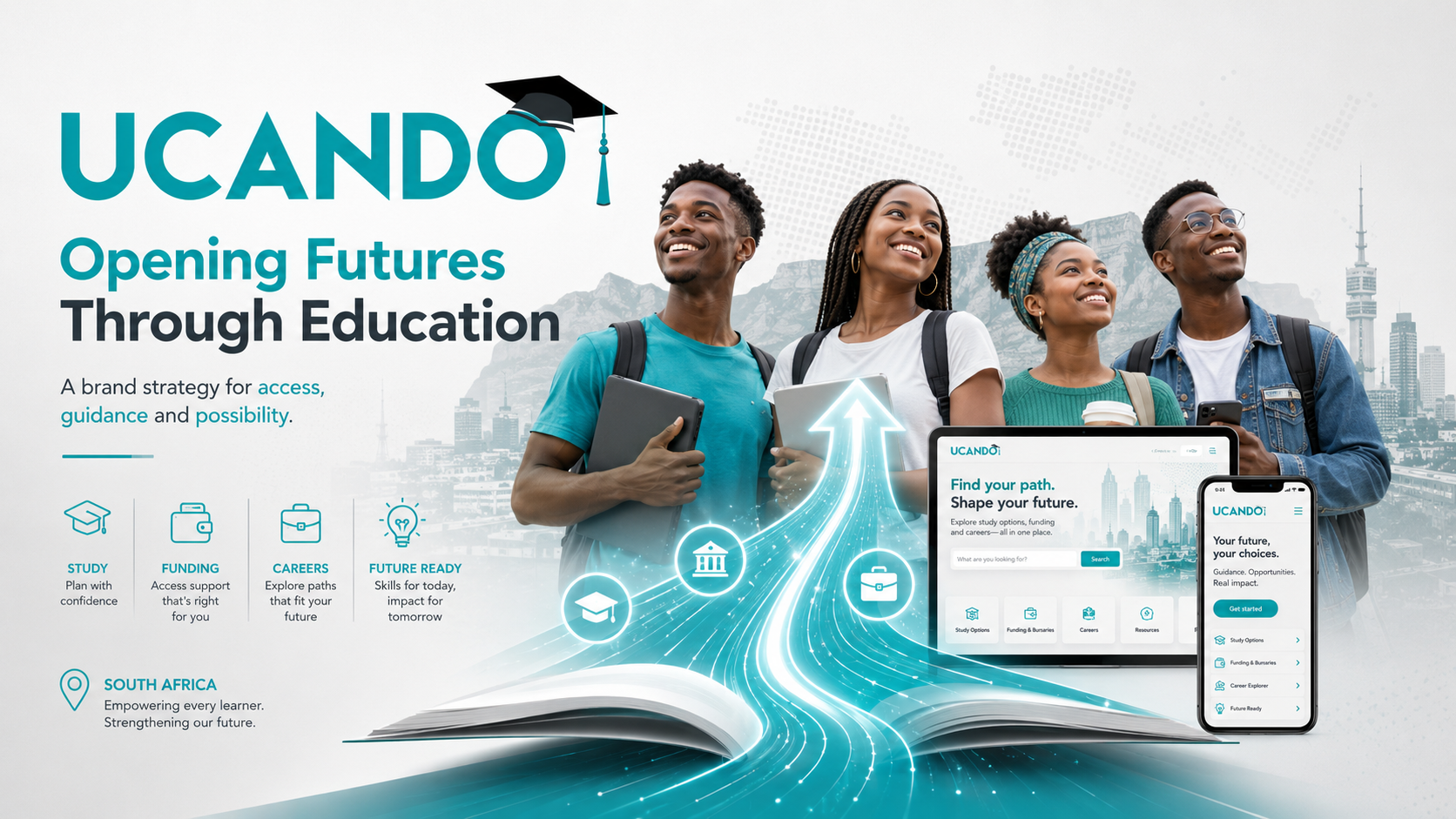
UCANDO, pronounced “You Can Do,” was created as a pre-launch brand strategy for a tertiary choices gateway in South Africa. The platform was designed to help learners explore study options, match subjects and marks to career pathways, find accredited institutions, and access bursaries or student funding opportunities. At its heart, this was a brand strategy about access. Not just access to information, but access to possibility, confidence and better decision-making.

For many learners, especially those in rural and under-resourced communities, the challenge is not a lack of ambition. It is a lack of exposure. When your world only shows you a narrow set of career options, your future can start to feel smaller than your potential. UCANDO was built to change that.

The Strategic Challenge
In many rural communities, learners often choose careers based on what they see around them every day. Teaching, nursing, policing, agriculture, retail and public service are visible and respected career paths, but they should not be the only paths a learner believes are available.

The broader challenge was to create a brand and platform that could connect multiple disconnected parts of the education journey:

Subject choices. Matric results. Study options. Accredited institutions. Bursaries. Student funding. Career guidance. Future employment pathways.

A tiny little ecosystem, because apparently giving young people a fair chance requires half the country to cooperate.

The brand also had to speak to several audiences at once: learners, parents, schools, universities, TVET colleges, funders, corporates, financial partners and education stakeholders.

It needed to feel hopeful without becoming naïve, digital without becoming cold, and strategic without losing the human reason it existed.

The Core Insight
A learner cannot choose a future they have never been shown. This insight became the foundation of the strategy.

UCANDO was not positioned as another inspirational education campaign. The world has enough slogans pretending to fix structural problems. The strategy needed to be more useful than that.

The brand had to turn uncertainty into direction by helping learners understand what their subjects, marks and interests could actually lead to.

The platform journey was structured around a simple decision pathway:
Subjects → Marks → Study Options → Institutions → Funding → Career Pathways

This became the strategic logic behind the brand, the platform experience and the communication system.

Brand Purpose
To help South African learners discover, understand and access the educational pathways that can shape their future.

Brand Positioning
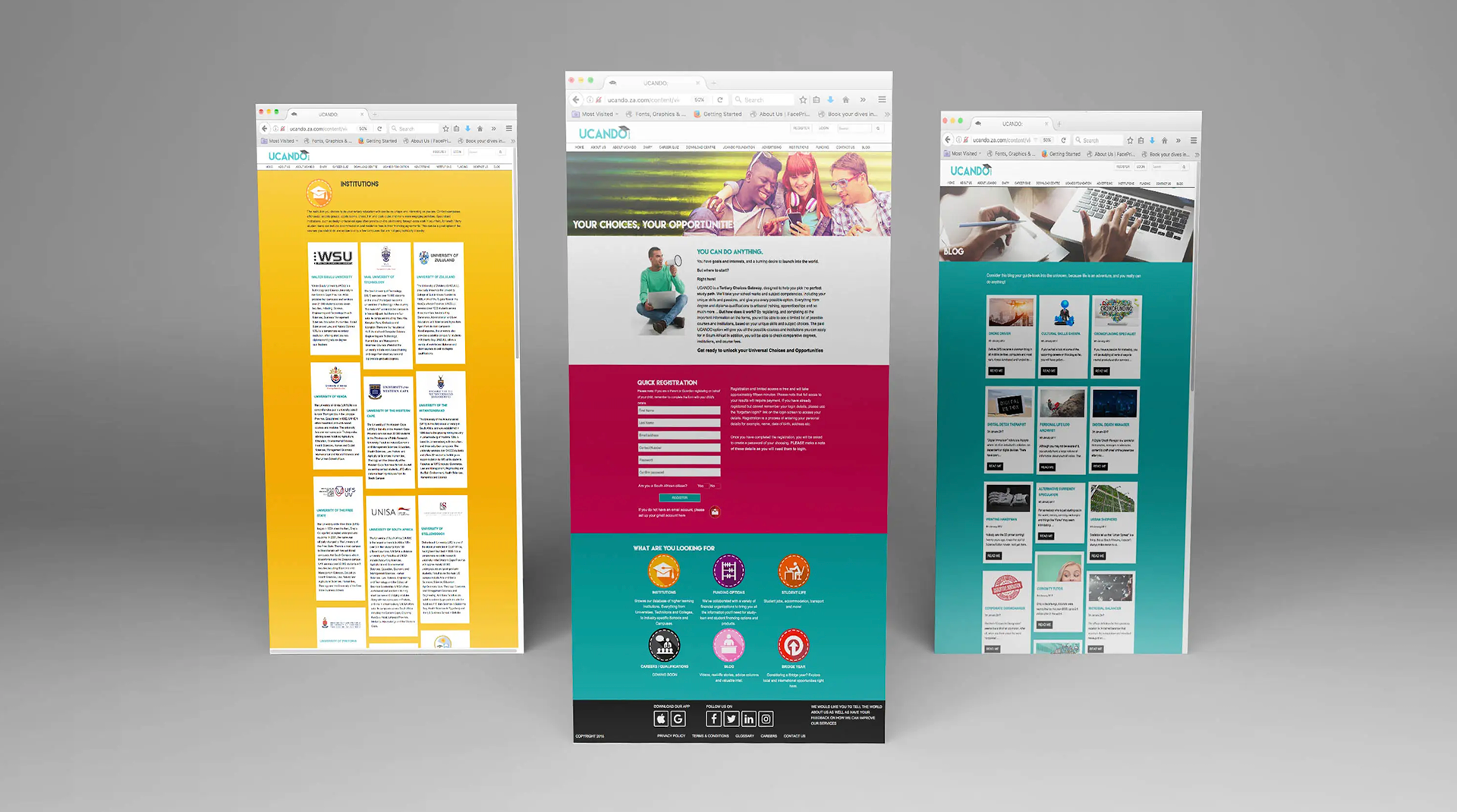
UCANDO is a mobile-first tertiary choices gateway that helps learners explore career options, match their subjects and results to study pathways, find accredited institutions, and access bursary or student funding information in one place.

The positioning was built around three strategic pillars:
Access – Making education, funding and career information easier to reach.
Clarity – Turning complex choices into simple, practical next steps.
Possibility – Helping learners see futures they may not have known existed.

Together, these pillars positioned UCANDO as both a digital platform and a future-access brand.

Brand Idea
Your Choices. Your Opportunities.
This became the central brand idea because it speaks directly to the learner while carrying the broader strategic promise of the platform.

UCANDO is not telling learners what they must become. It gives them the tools to explore what may be possible, understand what is required, and take the next step with more confidence.

The supporting message was simple:
• Because you can’t choose what you can’t see.
• That line became the emotional anchor of the brand strategy.

Audience Strategy
The brand strategy was designed for a multi-layered stakeholder ecosystem.
Learners needed a simple, encouraging and mobile-first platform that could help them explore options without feeling overwhelmed.

Parents and caregivers needed reassurance that UCANDO was credible, safe and connected to real opportunities.
Schools and educators needed a tool that could support career guidance and subject selection, especially where resources were limited.
Universities, TVET colleges and accredited institutions needed a structured platform to present courses, admission requirements and application information.
Corporates and bursary providers needed a meaningful CSI and future-skills development platform.
Financial partners needed to be positioned responsibly, with a clear focus on ethical funding guidance and student protection.

This audience structure shaped the brand architecture, messaging hierarchy, partnership strategy and rollout plan.

Platform Strategy
The proposed UCANDO platform was designed around the real decisions learners face before and after matric.
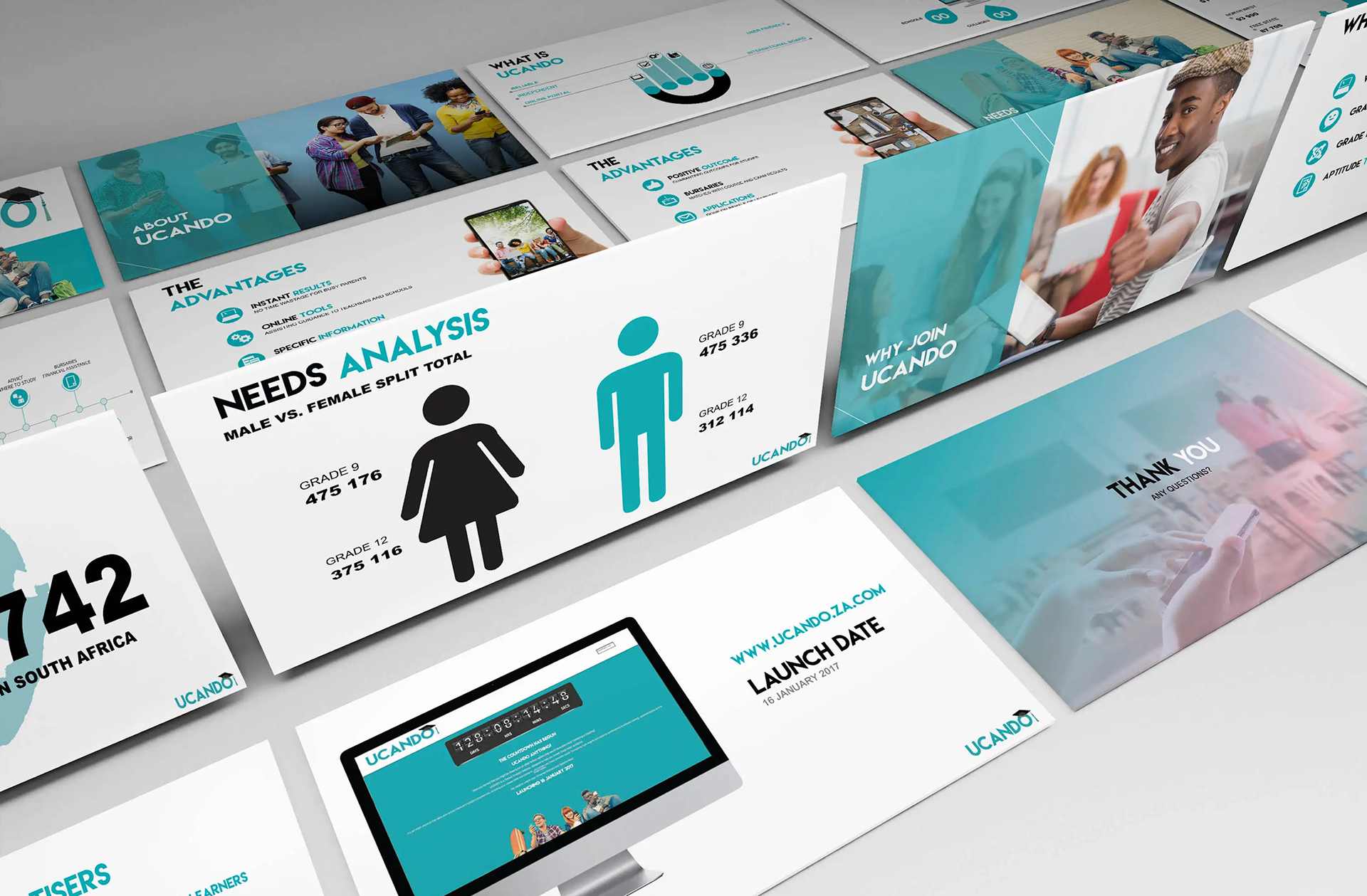
Subject Selection Guidance – Helping Grade 9 learners understand which subjects support different career paths before choices become limiting.
Grade-to-Career Matching – Helping Grade 12 learners match their subjects and marks to realistic study and career options.
Institution Matching – Connecting learners to universities, TVET colleges, short courses and accredited study providers.
Funding and Bursary Guidance – Helping learners discover bursaries, student funding options and financial support linked to their chosen pathway.
Career Discovery – Opening awareness of career paths beyond the industries learners may see in their immediate communities.
Mobile Access – Prioritizing cellphone access because many learners were more likely to have a phone than a personal computer.

The platform strategy was not only about functionality. It was about reducing friction in one of the most important decisions a young person can make.

Visual Identity Direction
The visual identity needed to feel credible, hopeful and accessible.

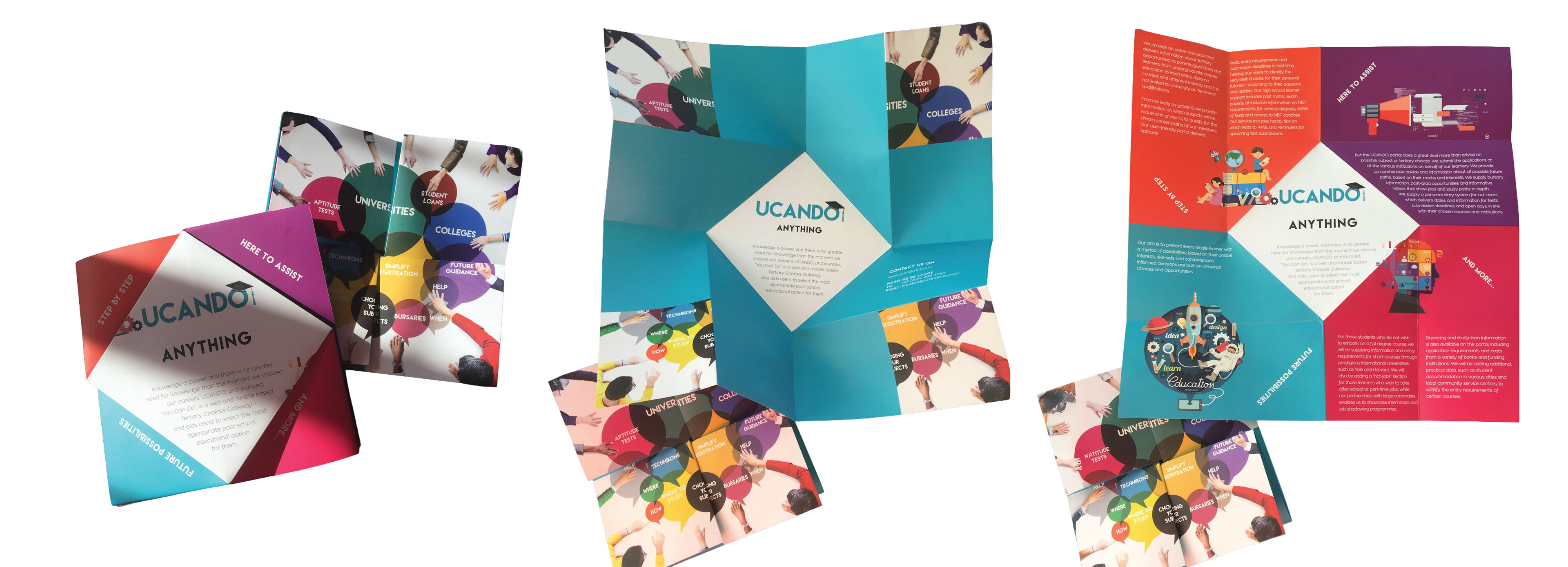
The UCANDO wordmark used a clean, bold structure supported by a graduation cap motif, immediately connecting the brand to education and future progression.

The colour palette was intentionally clear and focused:
Teal / Turquoise For optimism, clarity, technology and forward movement.
White – For openness, simplicity and accessibility.
Charcoal – For confidence, authority and readability.
Soft Grey – For structure, information design and balance.

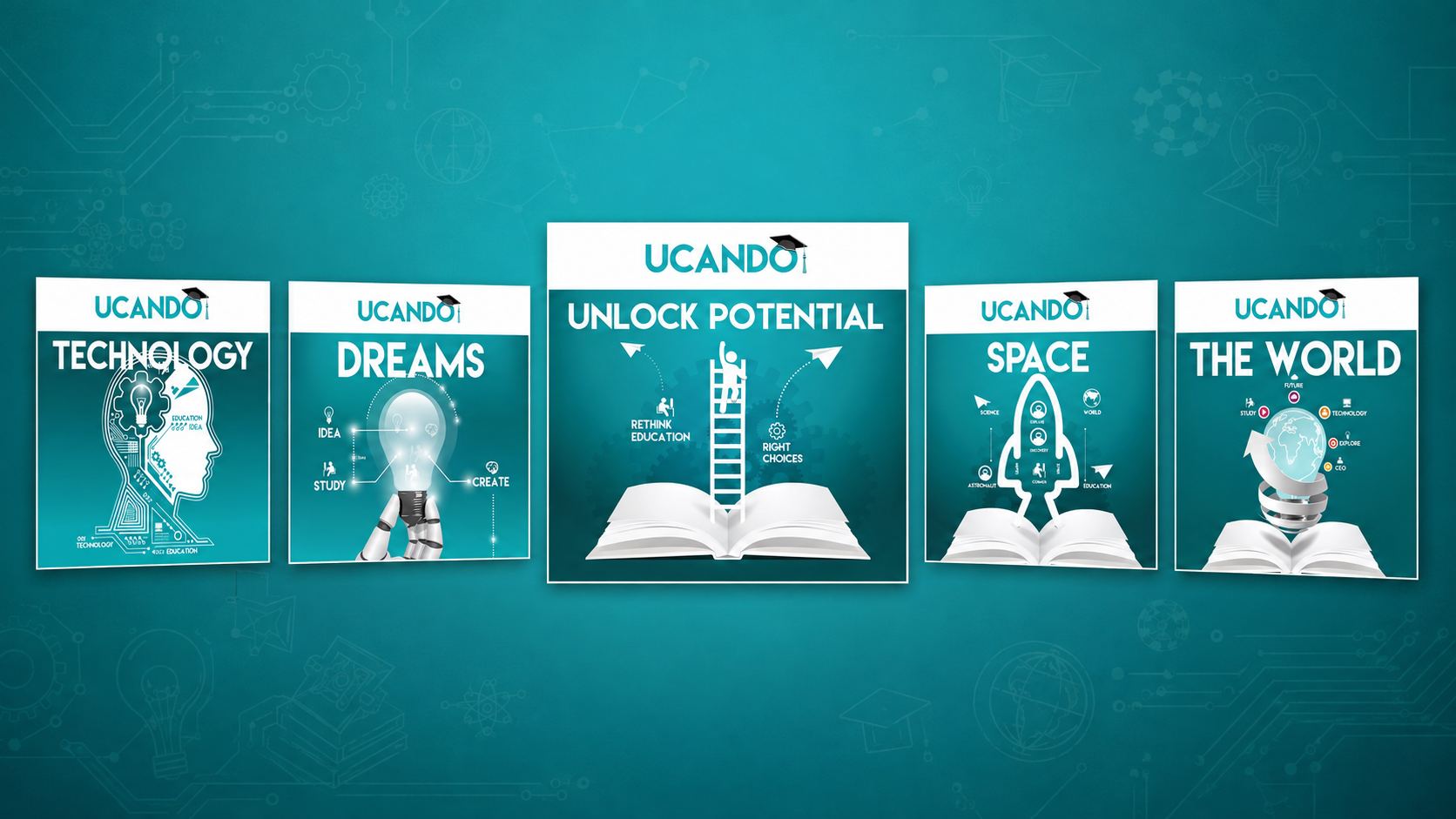
The visual language used pathways, mobile screens, open books, direction signs, education icons and learner imagery to express movement from uncertainty to opportunity.

Rather than creating a decorative identity, the visual system was designed to support the brand strategy: helping learners see the path ahead.

Communication Strategy
The tone of voice needed to be warm, direct and practical.

UCANDO could not sound like a government information portal written by a committee in a windowless room. It also could not rely on empty motivational language. The brand needed to guide, explain and encourage.

The communication system was built around clear learner needs:
Your Future Starts Here – Introducing UCANDO as the starting point for study and career exploration.
Find the Right Study Path – Helping learners understand course and institution options.
Funding Should Not Stop Your Future – Positioning bursaries and student funding as part of the journey.
See Careers Beyond Your Horizon – Expanding career exposure and possibility.
Smart Subject Choices Open More Doors – Helping learners plan earlier and avoid closing opportunities too soon.

Each message connected to a practical decision point in the learner journey.

Brand Rollout Strategy
The proposed rollout was planned over two years, moving from credibility to awareness, then from awareness to scale.

Phase 1: Brand and Platform Foundation
Develop the brand identity, positioning, messaging system, pitch material and platform structure.

Phase 2: Institution Onboarding
Secure accurate course, admission and accreditation information from universities, TVET colleges and approved providers.

Phase 3: School Activation
Introduce UCANDO through career days, school presentations, learner registration drives and subject-choice support.

Phase 4: Corporate and Funding Partnerships
Bring bursary providers, banks, CSI departments and corporate partners into the ecosystem.

Phase 5: Social and Mobile Campaigns
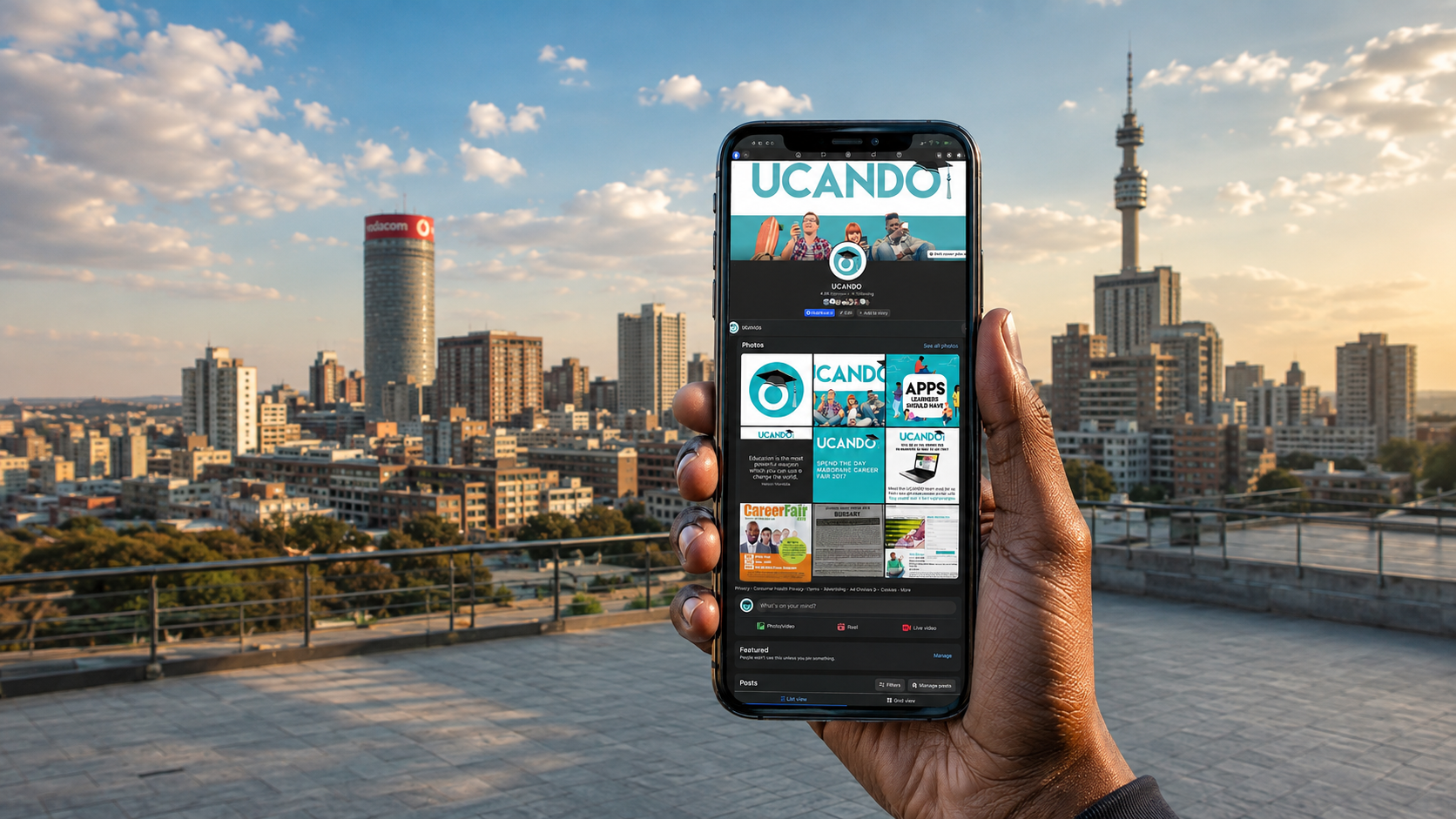
Use platforms relevant to students at the time, including Facebook, WhatsApp, YouTube, Instagram, Twitter and SMS-supported communication.

Phase 6: Growth and Investment
Use learner registrations, institutional participation and bursary listings to build a scalable platform attractive to sponsors, investors and corporate partners.

This rollout strategy allowed UCANDO to build trust before chasing scale, which is sadly not how every startup behaves.

Social Media and Campaign Strategy
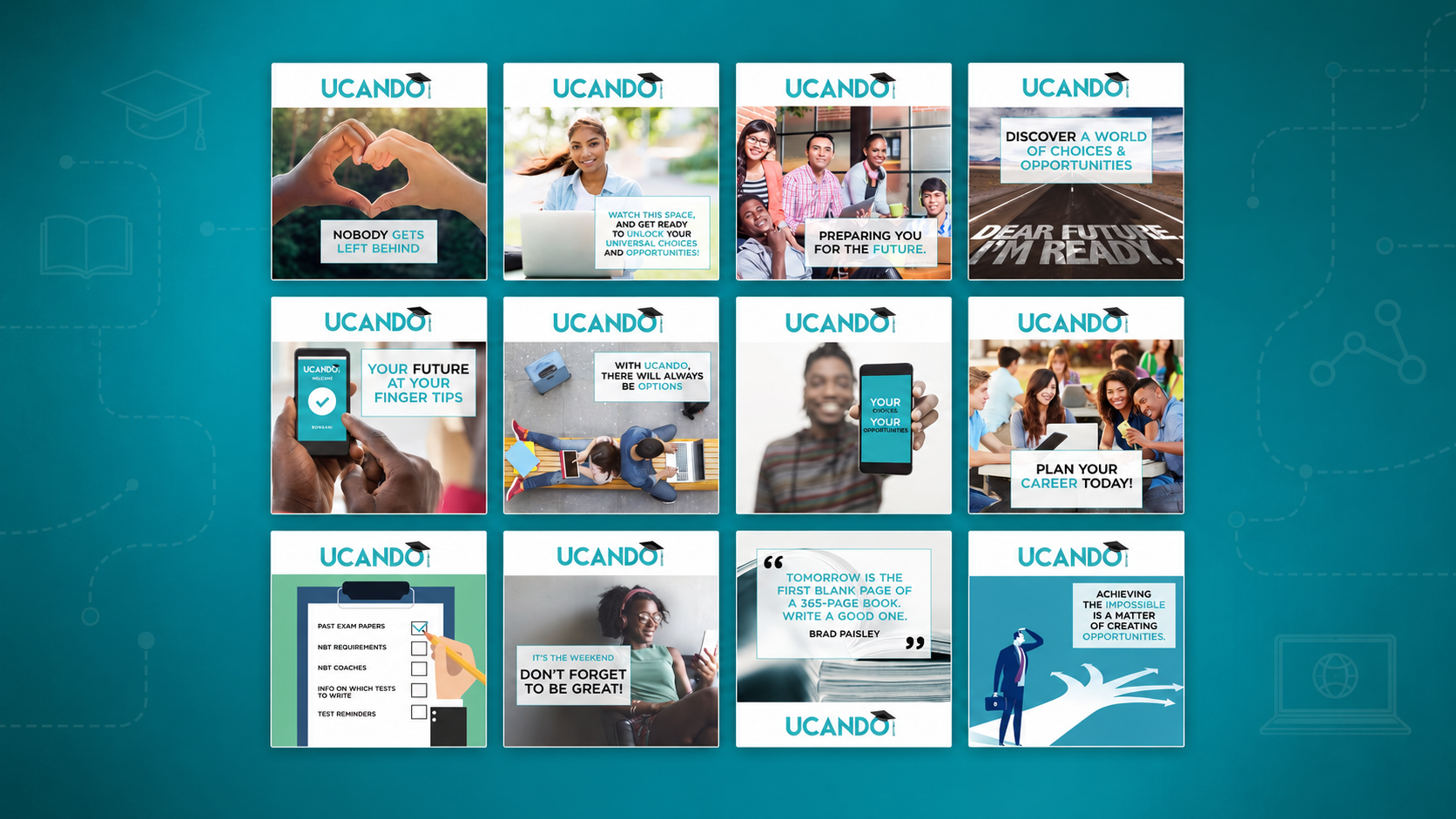
The social media strategy was built to do more than create awareness. It needed to educate, guide and shift behavior.

The content pillars were based on the most important learner questions:
• What can I study with my subjects?
• Which careers match my interests?
• Where can I apply?
• How do I find funding?
• What choices should I make now to keep more doors open later?

Campaign content was designed around practical, high-value themes:
• Careers You Didn’t Know Existed
• Introducing learners to unfamiliar career paths.
• Find the Right Study Path
• Explaining universities, TVET colleges, short courses and accredited options.
• Funding Your Future
• Making bursaries, loans and student funding easier to understand.
• Smart Subject Choices
• Helping Grade 9 learners make better subject decisions.
• Matric Next Steps
• Supporting Grade 12 learners with applications, deadlines and planning.

This created a content system that could support acquisition, education and trust-building at the same time.


Back to Top